-- From Stung Treng to Sihanouk Ville
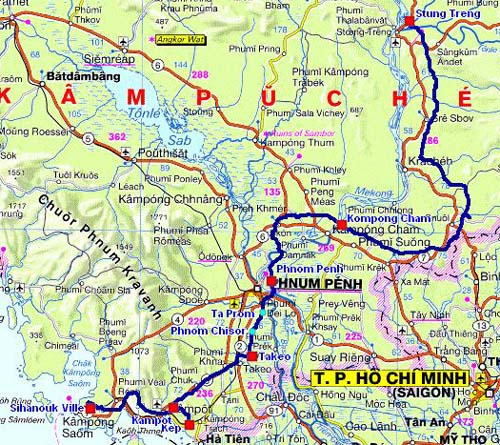
The road tracklog
From Stung Treng to Sihanouk Ville
from 25/10 to 02/11/2008
The 25/10 was the Day of Dupes; many local people said me that the road to Sen Monorom was in excellent condition because tarred. This was not my surprise after a crossroads in Snuol to drive on a laterite track softened by rain, perfectly muddy and full with potholes. At the end of five kilometres I stopped and by lunching I took a decision to give up. Curiosities of the village in mountain were not worth to endure this track to 10 km/h during six hours. I made half-turn and I moved towards Kompong Cham where after a good beer and a discussion with Mr. Chea Vannat, local French speaking guide, I bivouacked on the edge of Mekong.
The 26/10 was a short driving day I arrived in Phnom Penh in a beating rain. I found the carpark of “Silver Pagoda” for the nième+1 time.
The 27/10 I left Phnom Penh to go southwards to visit old Khmer sites by the road NH2 which with experiment does not have potholes but on the other hand is very embossed. First of all I stopped in Ton Le Baty where I rented a moto-driver to visit the temple of Ta Prom out of laterite built by the king Jayavarman VII (1181-1219). It consists of five rooms; each one has a Linga and a statue of the Buddha, syncretism of the Brahmanism and Buddhism. At some steps the temple of Yeah Peau offers little interest. My guide was a charming gamine.
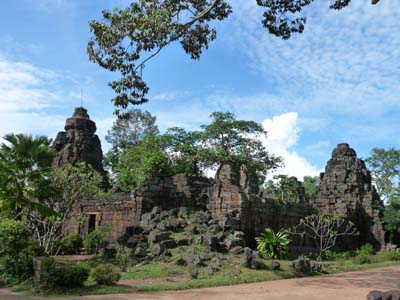
Ta Prohm
Ton Le Baty
the 27/10/2008
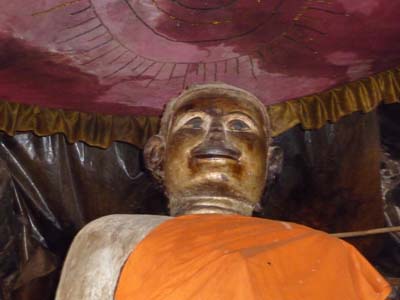
Bouddha
Ta Prom
the 27/10/2008
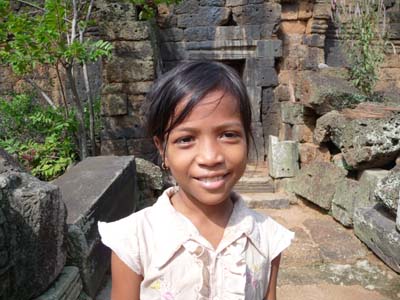
My guide
Ta Prom
the 27/10/2008
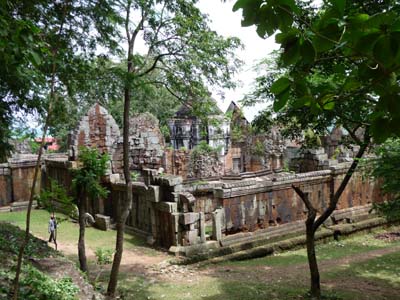
Phnom Chisor
the 27/10/2008
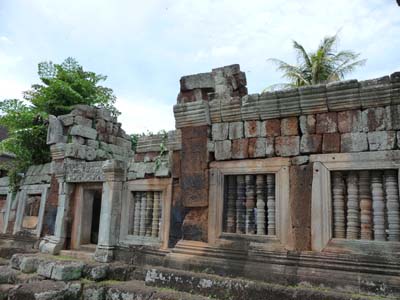
Gallery
Phnom Chisor
the 27/10/2008
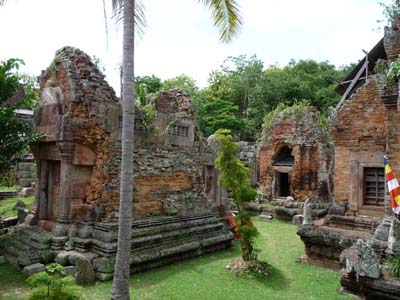
Courtyard
Phnom Chisor
the 27/10/2008
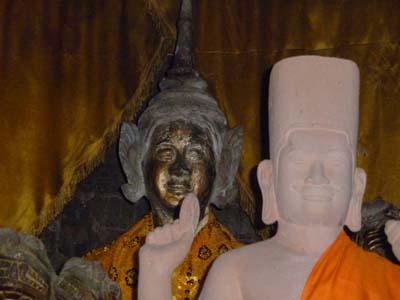
Shiva
Phnom Chisor
the 27/10/2008
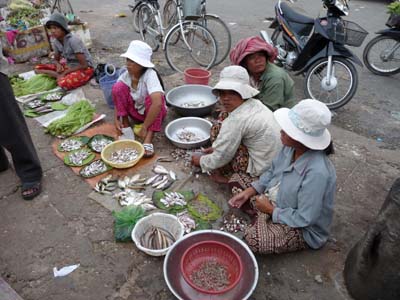
The market
Takeo
the 27/10/2008
The 28/10 I left in excursion with Mr. Sin Soeung, deputy director of Tourist Office of the district of Takeo, who French speaking was my guide. I rented a speedboat which took the channel 15, 21 kilometres length, 30 meters wide and 3 meters deep; it was dug in 1984.
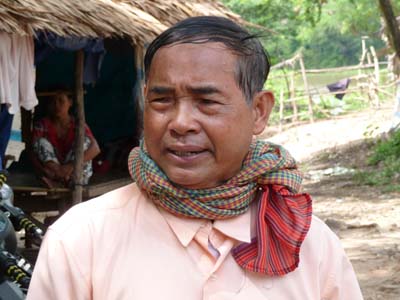
My guide
Takeo
the 28/10/2008
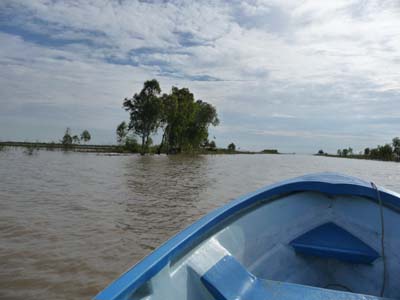
Canal 15
Takeo
the 28/10/2008
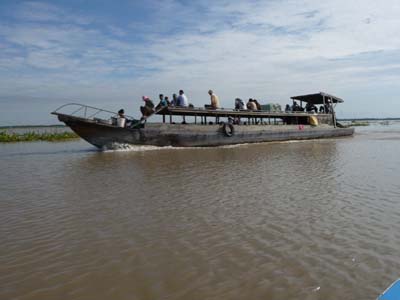
Coche d'eau
Canal 15
the 28/10/2008
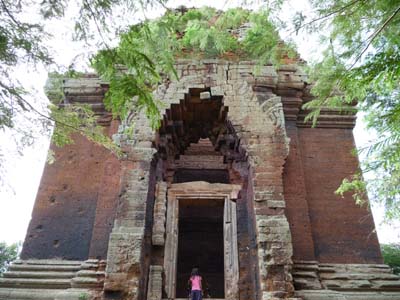
Main gate
Phnom Da
the 28/10/2008
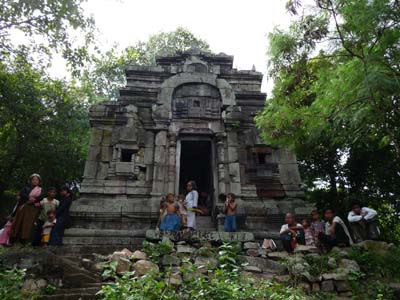
Wat Ashram Moha Russei
the 28/10/2008
The comments by Mr. Sin Soeung were of an exceptional interest.
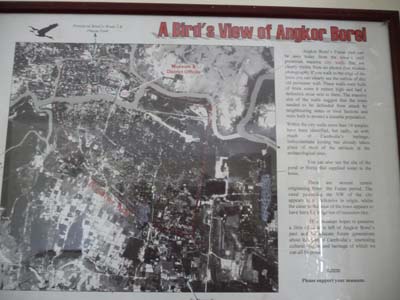
Museum
Angkor Borei
the 28/10/2008
The 29/10 was a long driving morning to reach the balneal city of French colonization, Kep-sur-Mer. After destruction of the Khmer Rouges, plundering of the Vietnamese occupation army and sale of materials of recuperation by the Cambodians to survive during the famine of 1979/80, there remain only some ruins of notable French’s houses. I bivouacked along the beach.
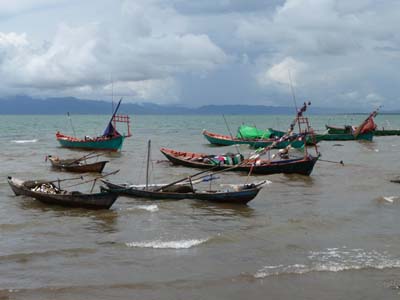
Fishing port
Kep-sur-Mer
the 29/10/2008

"Art Déco" ruin
Kep-sur-Mer
the 29/10/2008
The 31/10 after a last lunch at “Crab Market” in Kep-sur-Mer, I arrived in Kampot where I established a bivouac at the edge of Prek Kampong Bay. Then I looked for an advisability to visit Bokor Hill the following day. Orchid Guesthouse quoted to me seriously .
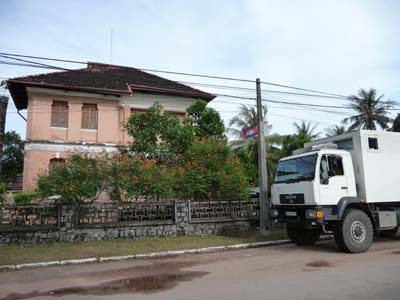
Colonial house
Kampot
the 31/10/2008
Even by deflating tyres my truck did not drive under 2 meters high; fortunately there has been a new bridge a few years 200 meters further.
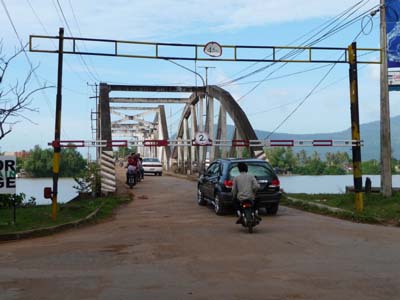
Old bridge!
Kampot
the 31/10/2008
The day after at eight O’clock in the morning I embarked on the plateau of a Toyota Hilux to go up in Bokor Hill Station; the station of altitude, 1080 meters high, was built by French from 1917 to 1925. Given up at the time of the independence of Cambodia, it was victim of the civil war by the Khmer Rouges then of the occupation of the Vietnamese army. After a two-hour trip a ghost-town appeared in clouds, it was eerie. The ruins appeared and disappeared with the liking of the winds sweeping the clouds. The remaining buildings, a Church, a Palace Hotel, a Casino and a Post office are style of the 1920’s. In the great room of the Palace Hotel it was easy to imagine the carefree colonial society dancing and having fun.
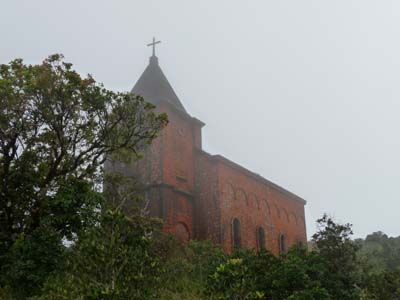
Catholic Church
Bokor Hill
the 01/11/2008
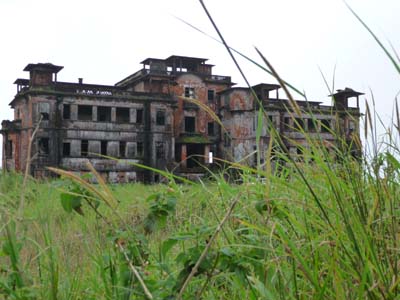
Palace Hotel
Bokor Hill
the 01/11/2008
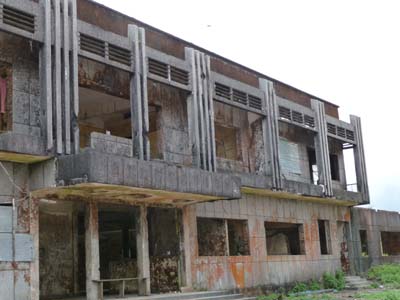
Le Casino
Bokor Hill
the 01/11/2008
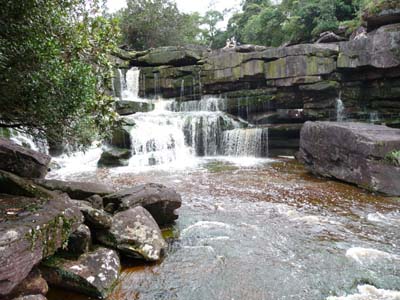
Popokvil Falls
Bokor Hill
the 01/11/2008
The 02/11 I left Kampot to Sihanouk Ville where I arrived about midday to establish a bivouac on White Sand Beach in edge of sea preparing the publication of a new page of my website.
