-- Trip in Burma
1---- Read in “Malaysia Airlines' Inflight Magazine” during the flight from Kuala Lumpur
to Yangon:
“A good traveller has no fixed plans and is not intent on arriving”.
There is like a perfume of unknown and not of adventure; the only certainty are the entry and the exit in the visited country related on the duration of the visa and the air ticket for going back often required either to obtain a visa or to enter the country at the control of immigration.
Travel in Myanmar:
The road plan envisaged by the Presentation
was respected only the budget was in going
beyond of 12%, established with a 2005 Lonely Planet, due to terrestrial
transport costs. The security days were occupied to visit the city and its
surroundings of Pyay (Prome), Information.
Travel to the Philippines:
The road plan presented by the
Presentation
was not respected in detail, bad weather in
Cordillera in North Luzon, stay prolonged in Manila to visit the on Monday
closed museums and stay in Iloilo to admire ancient Hispanic churches. The
budget was largely exceeded,
Information.
They are reported a posteriori in the shape of a catalogue as Prévert.
Yangon
The 28/03 & 29/03, the 01/04, the 07, the 23 & le 24/04
Yangon became the capital of Myanmar in 1885 after the Third Anglo-Burmese War; its
name was corrupted Rangoon. The military junta transferred the administrative
centre to Naypyidaw as future capital. It was my entrance and exit point as
well as the crossroads of the visits towards the east, the west and north.
In 22 years the city appreciably evolved, roadways of the streets were renewed, public
buildings repainted. Alas it is very polluted as well by exhaust fumes of the
out of date buses as by that of the individual power generators proof of the
economic bankruptcy of the military government unable to provide it although
the country has very important natural gas layers, stake of international
contracts. Ex British colony, Myanmar is the only country in South-East Asia
to have a right-hand drive vehicle traffic except the ex French colonies of
Indo-China.
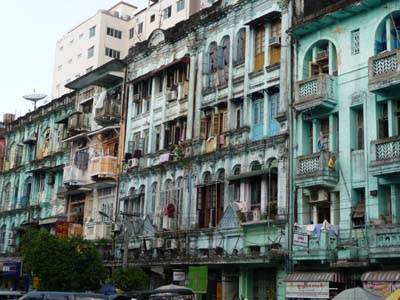
Yangon
28/03/2009
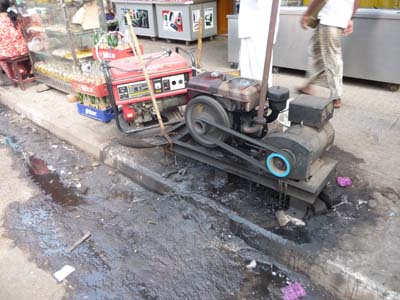
Power generator
Yangon
28/03/2009
The afternoon of 28/03 I walked the suggested trip by the LP. My first stop was, not without nostalgia “The Strand Hotel” where we remained 22 years ago. At that time it was in very bad condition. Thereafter it was restored in 1995. Like the Raffles in Singapore, the Oriental in Bangkok, the Coliseum in Kuala Lumpur, it testifies of the past of East India Company and Anglo-Saxon authors who looked after their cirrhosis or their malaria there and more often both.
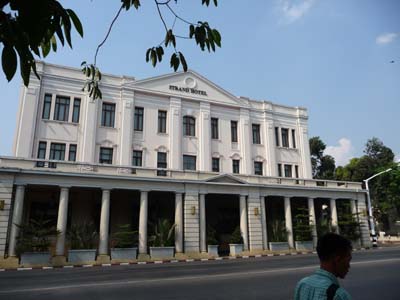
The Strand Hotel
Yangon
28/03/2009
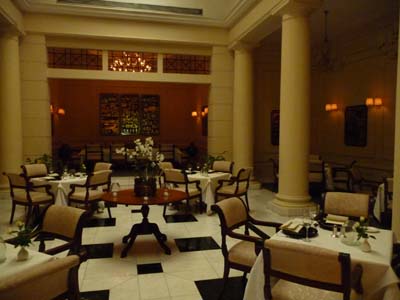
The Strand Hotel
Yangon
28/03/2009
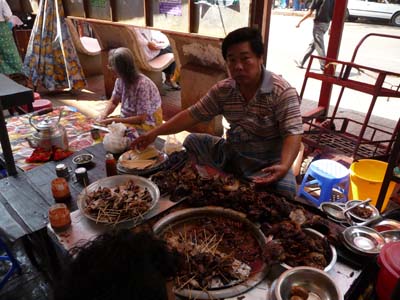
Street shop
Yangon
28/03/2009
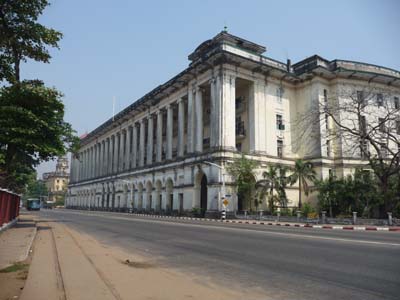
Strand Street
Yangon
28/03/2009
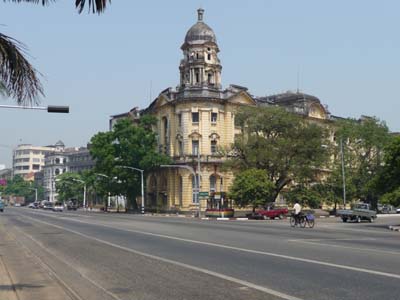
Strand Street
Yangon
28/03/2009
The landscape of Yangon is dominated by imposing Shwedagon Paya, night picture in cover. It is Mecca of Burmese Buddhists who must at least once visit it in their life. The legend makes go up the construction of the first Stupa well before the emperor Asoka, 3rd century BC. The current structure would date according to an inscription back to 1485. It reaches 98 meters high at the top of a hill at 58 meters above the sea level. The Hti, umbrella at the top, is out of gold and silver with more than 5500 diamonds weighing more than 2000 carats and at the ultimate top a diamond of 76 carats. It is surrounded by 68 Stupa of various sizes devoted as well to the deities of the Buddhist Pantheon as to those of the Hinduism. The city counts many others Stupa I visited only the worthiest ones.
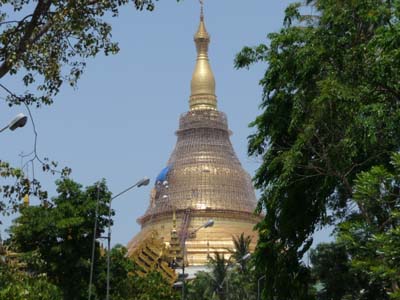
Shwedagon Paya
Yangon
28/03/2009
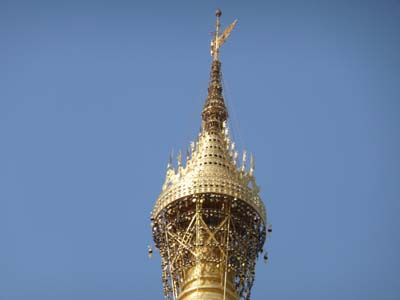
Shwedagon Paya, Hti
Yangon
28/03/2009
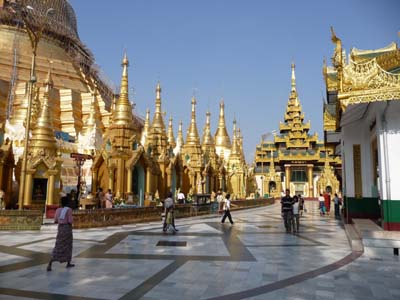
Shwedagon Paya
Yangon
28/03/2009
Sule Paya in the centre of the city surrounded by administrative buildings is so to speak impossible to avoid it, it is a roundabout. It is old of more than 2000 years.
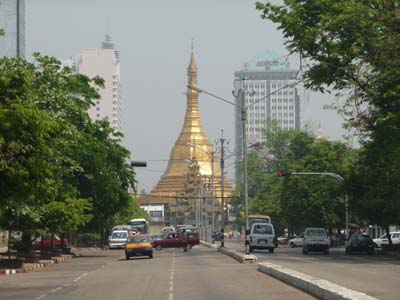
Sule Paya
Yangon
28/03/2009
Botatung Paya at the edge of Yangon River shelters a relic of the Buddha as well as an image of the gilded bronze Buddha returned by English in 1951.
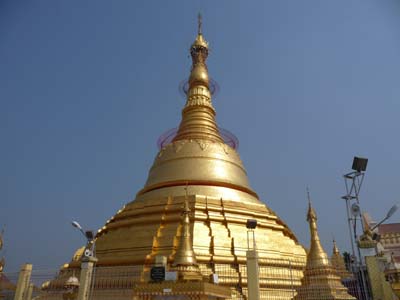
Botatung Paya
Yangon
28/03/2009
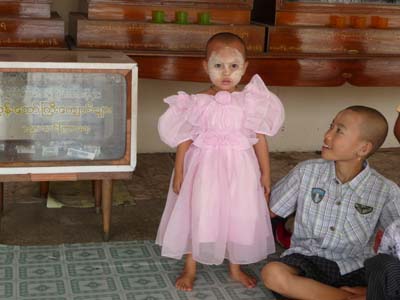
Child with thanakha (sunscreen/make-up)
Yangon
28/03/2009
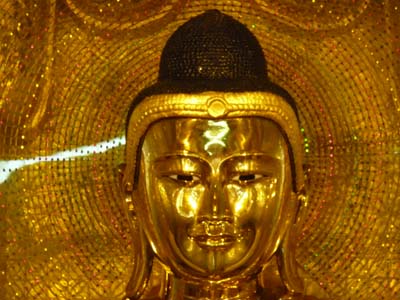
Gilded bronze Buddha
Yangon
28/03/2009
Chaukhtatgyi Paya shelters a reclining Buddha of big size with a serene face.
The National Museum in spite of a poor scenography and a scanty lighting is worth
a detour for the presentation of the evolution of the Burmese writing of
Indian origin as well as a sumptuous collection of objects out of gold in bad
enlightened showcase behind imposing iron grids.
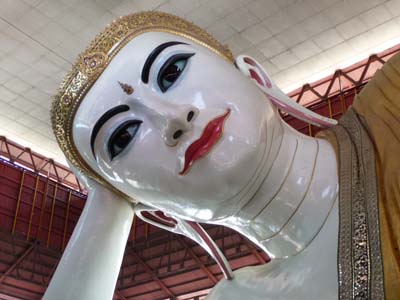
Reclining Buddha
Yangon
28/03/2009
Golden Rock & Bago
The 30/03 et 31/03
The 30/03 a bus took me along to Kipun to see the Golden Rock of Kyaiktiyo In the bus, duration four hours; I have two neighbours successively who chewed betel and spited out noisily bloody spittles in a transparent plastic bag. The latest was a monk who left on the seat his dejections; I pointed out it and intimated the order to him to carry them. In another bus occupying the seat close to the window, my neighbour leant over me to spit out by the window. I violently pushed back him in front of the other passengers who agreed. As foreigner I was often the object of attention if not curiosity.
en route
30/03/2009
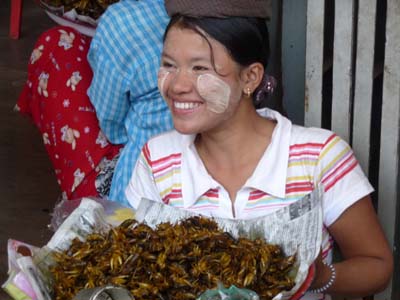
Girl with thanakha
en route
30/03/2009
After having booked a room, bought a ticket into a bus for the following day to Bago,
I went to the terminus of the trucks which climbed the mountain. Their bucket
was equipped with wood benches. The way lasted a half an hour; it remained
still another half an hour on foot on a concreted track to reach the mystical
Rock. I waited to sunset until 17:30; alas it was still too early but the last
truck went down at 6 p.m. and I did not wish to do the way down up to Kipun on foot.
Within sight of the Rock and of pilgrims praying around I felt no particular emotion!
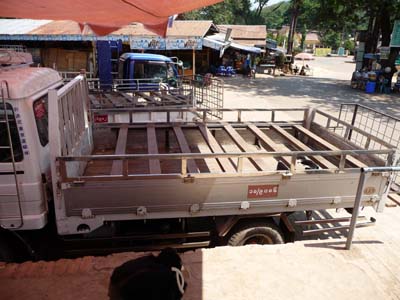
Truck's beds
Kipun
30/03/2009
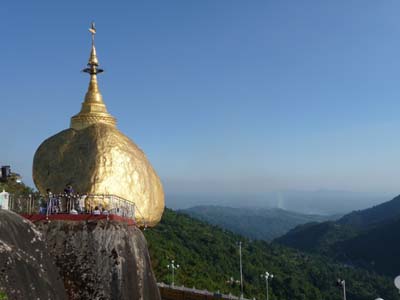
Golden Rock
Kipun
30/03/2009
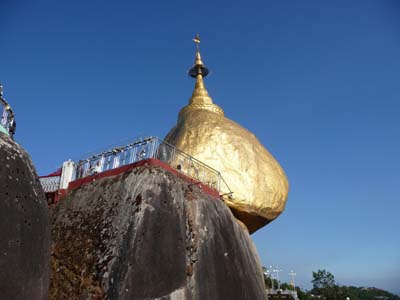
Golden Rock
Kipun
30/03/2009
The 31/03 I arrived in Bago, Pegu, where a motodriver awaited me on the recommendation of
the hotel in Kipun, Burmese phone, he led me to Jade Hotel, then he was my
vehicle to visit this site with very dispersed monuments. I present the
worthiest ones.
Shwethalyaung Buddha is 55 meters length and 16 meters high.
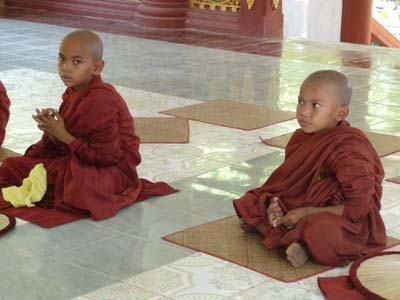
Moinillons
Bago
31/03/2009
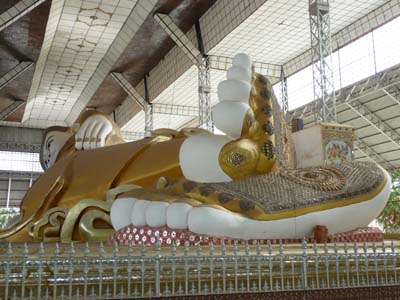
Shwe Thalyaung Buddha
Bago
31/03/2009
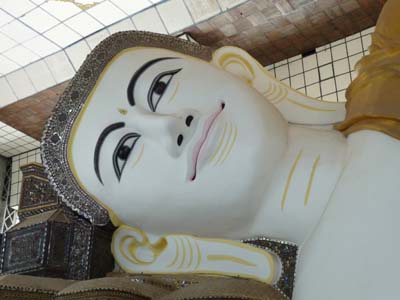
Shwethalyaung Paya
Bago
31/03/2009
Kyaik Pun Paid, they are four Buddhas sited back to backs built in 1476.
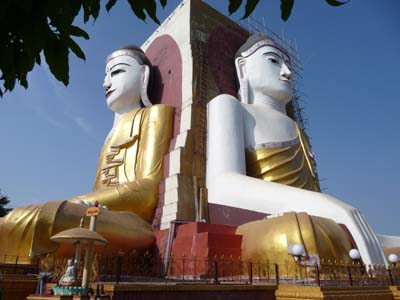
Kyaik Pun Paya
Bago
31/03/2009
Shwemawdaw Paya is 114 meters high and old of more than thousand years.
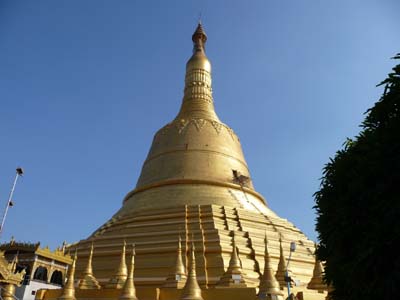
Shwemauwdaw Paya
Bago
31/03/2009
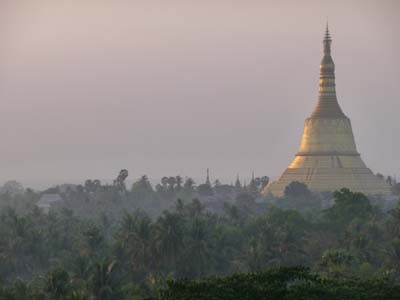
Shwemauwdaw Paya
Bago
31/03/2009
The Three Lions Cheroot Factory, where women roll the famous Burmese cigars.
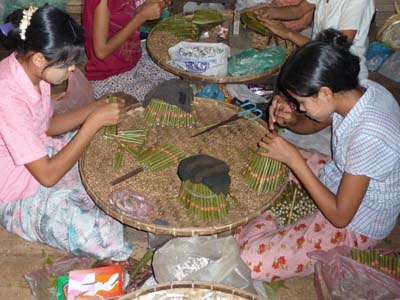
The Three Lions Cheroot Factory
Bago
31/03/2009
It was a very long day on motorbike, the waiting for the sunset was a moment of pleasant rest.
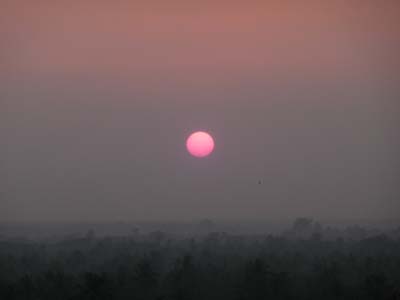
Sunset
Bago
31/03/2009
Sittwe & Mrauk U
From 02/04 to 06/04
The 02/04 back to Yangon I took a plane to go towards the west in the state of Rakhaing
at the edge of the Bay of Bengal with a border with Bangladesh. Sittwe is the
only town of this state open to foreigners to visit the historic site of Mrauk
U by taking a ferry boat.
Clock Tower in Sittwe set up by Dutch in the 18th century.
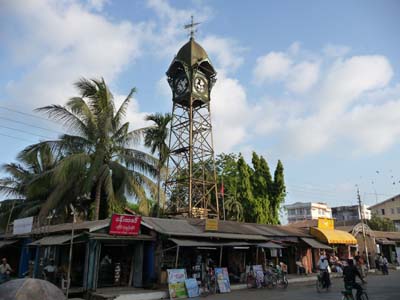
Clock Tower
Sittwe
02/04/2009
Port of Sittwe on Kaladan River.
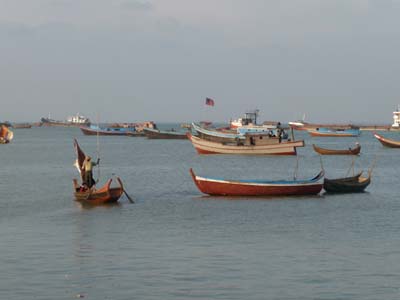
Fish harbor
Sittwe
02/04/2009
Mosque in Sittwe which counts more than 40% of Moslems.
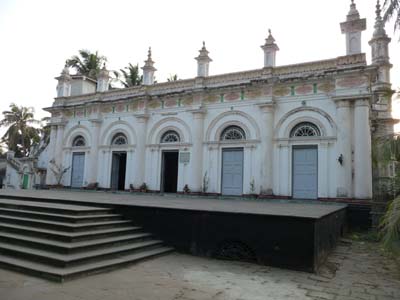
Jama Mosque
Sittwe
02/04/2009
The 03/04 was a long morning on boat in the alluvial plain to arrive in the early afternoon in Mrauk U. It was the capital of the kingdom of Rakhaing from 1430 to 1784 succeeding two Cities-states, Dhanyawdy from the 1st to the 6th century, and Wethali from the 3rd to the 10th century. This state was annexed by British Raj after the First Anglo-Burmese War in 1824.
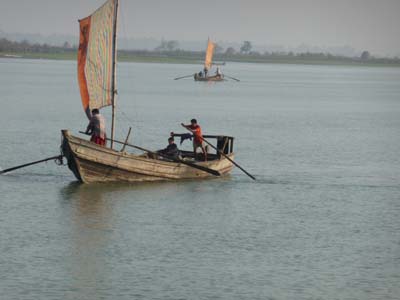
Fish harbor
Sittwe
02/04/2009
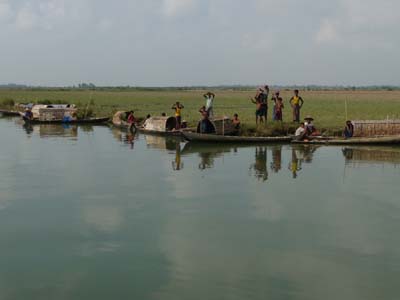
Kaladan River
03/04/2009
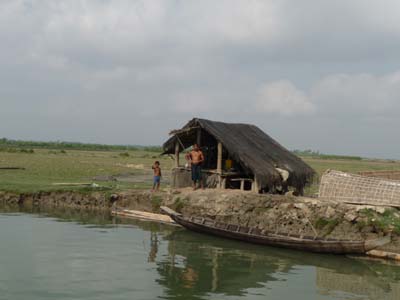
Kaladan River
03/04/2009
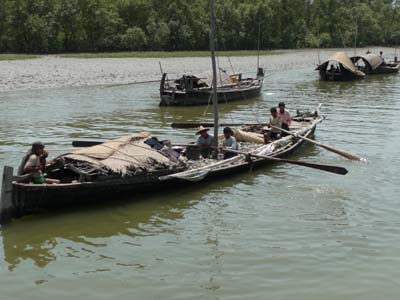
Kaladan River
03/04/2009
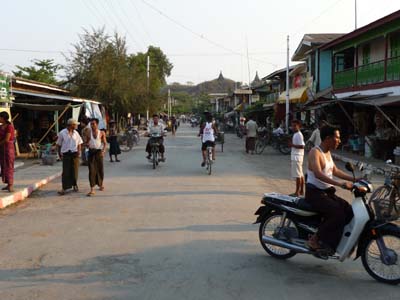
Mrauk U
03/04/2009
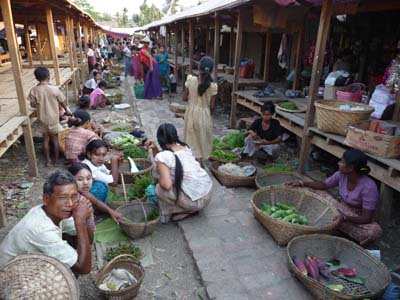
Market
Mrauk U
03/04/2009
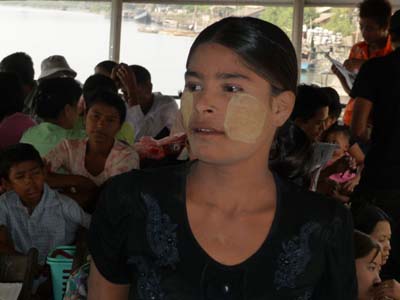
Girl with thanakha
Mrauk U
03/04/2009
In the late afternoon I climbed the hill of Shwetaung Paya built on the highest point in 1553. The landscape is dramatic, set of capped by Stupa hills dominating the old royal palace of which there remains only the surrounding wall.
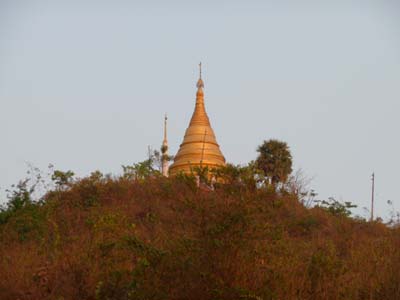
Shwetaung Paya
Mrauk U
03/04/2009
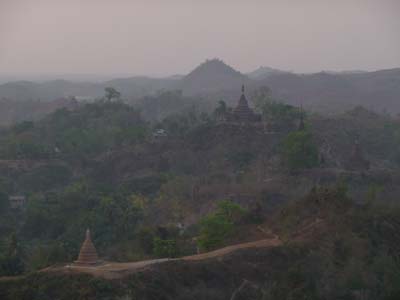
Landscape
Mrauk U
03/04/2009
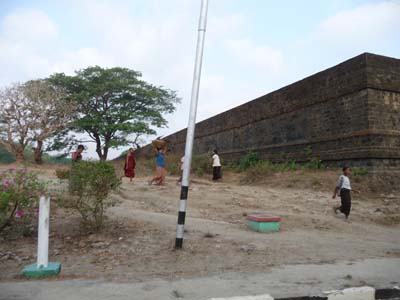
Palace
Mrauk U
04/04/2009
The following day I strolled from monument to monument by bicycle. They are built out of sandstone. The most remarkable have an interior gallery with sculptures of Buddha image, scenes of Jataka, acrobats and many others sometimes obscene.
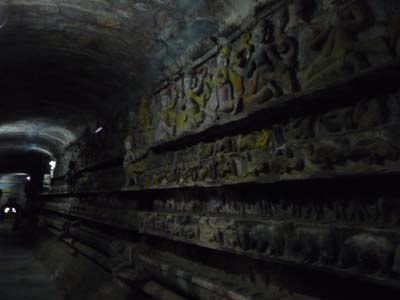
Shittaung
Mrauk U
04/04/2009
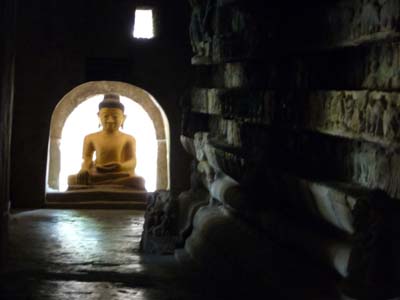
Shittaung
Mrauk U
04/04/2009
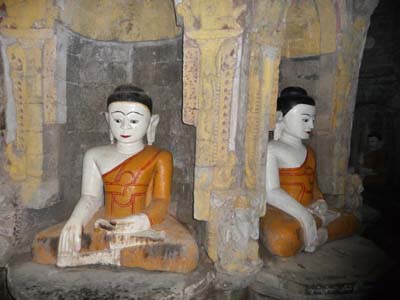
Ratanabon
Mrauk U
04/04/2009
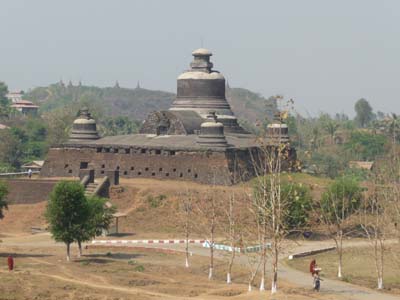
Dukkanthein Paya
Mrauk U
04/04/2009
The 05/04 was a morning on boat to go back to Sittwe and the following day I took a plane to return to Yangon.
Mandalay
From 07 to 09/04
I went by plane in Mandalay where I arrived in the late morning at the
international airport very far from the city that I visited on foot in a long
torrid afternoon. It was the capital of the last Burmese kingdom before the
Third Anglo-Burmese War in 1885.
The royal palace entirely rebuilt by a Burmese sponsor.
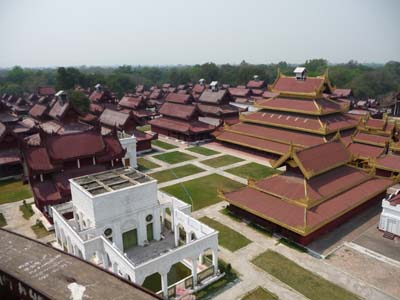
Royal Palace
Mandalay
07/04/2009
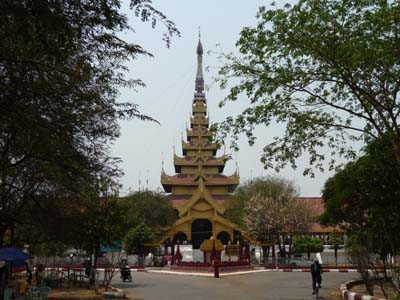
Royal Palace
Mandalay
07/04/2009
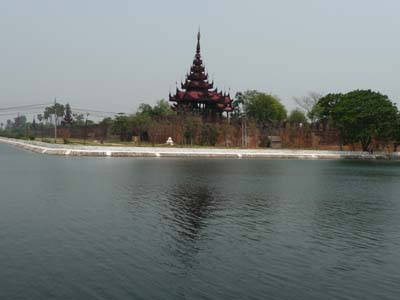
Royal Palace
Mandalay
07/04/2009
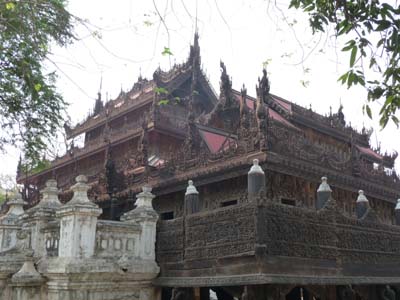
Shwenandaw Kyaung
Mandalay
07/04/2009
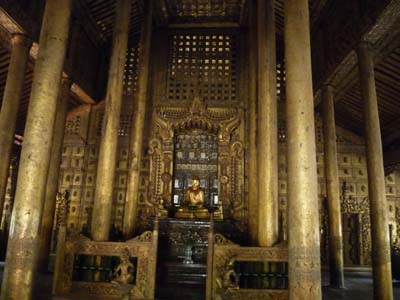
Shwenandaw Kyaung
Mandalay
07/04/2009
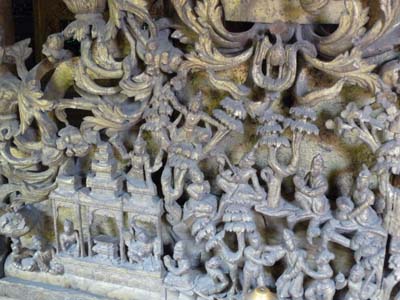
Shwenandaw Kyaung
Mandalay
07/04/2009
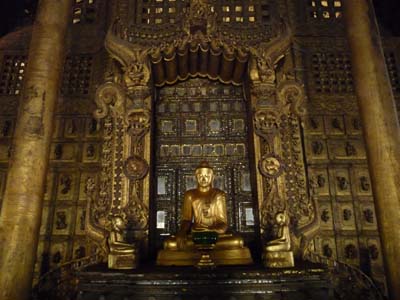
Shwenandaw Kyaung
Mandalay
07/04/2009
Kuthodaw Paya “The World's biggest book” is surrounded by 729 marble slabs inscribed with the Buddhist canon sheltered in small Stupas.
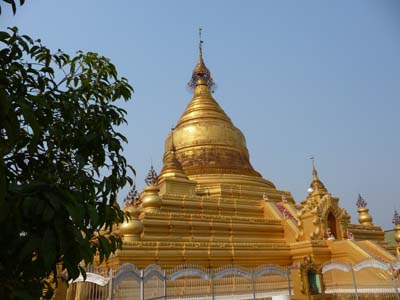
Kuthodaw Paya
Mandalay
07/04/2009
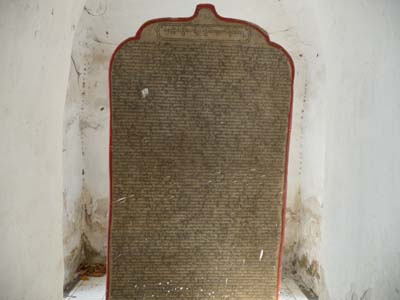
Kuthodaw Paya
Mandalay
07/04/2009
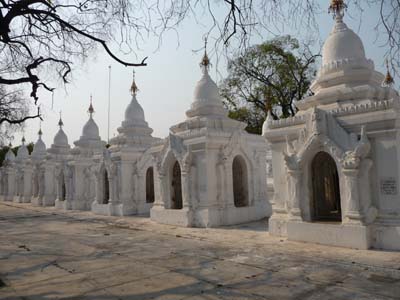
Kuthodaw Paya
Mandalay
07/04/2009
Sandamani Paya is surrounded by 1774 marble slabs with the comments of Tripitaka.
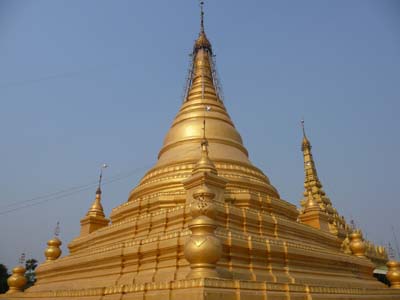
Sandamani Paya
Mandalay
07/04/2009
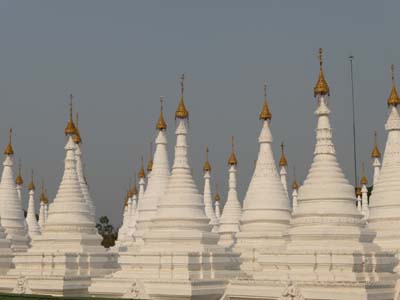
Sandamani Paya
Mandalay
07/04/2009
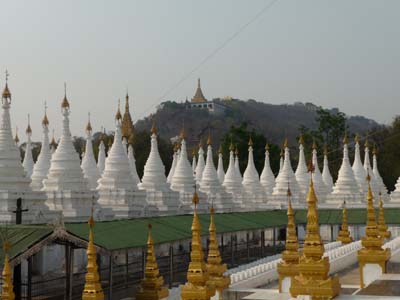
Sandamani Paya
Mandalay
07/04/2009
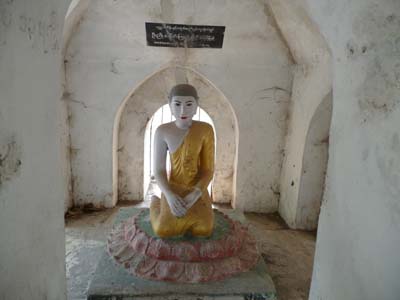
Kyautawgyi Paya is surrounded by small temples containing of the images of the Buddha and the 80 Arahats.
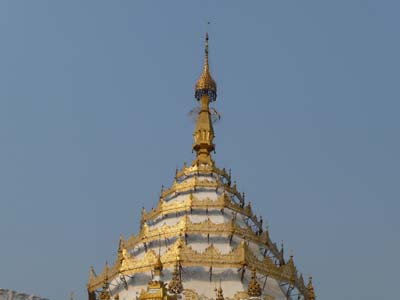
Kyautaugyi Paya
Mandalay
07/04/2009
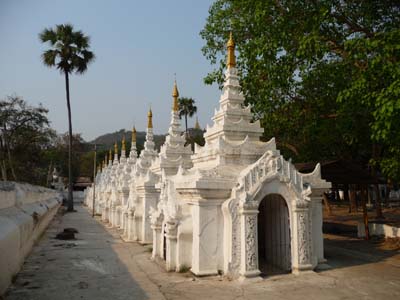
Kyautaugyi Paya
Mandalay
07/04/2009
Kyautaugyi Paya
Mandalay
07/04/2009
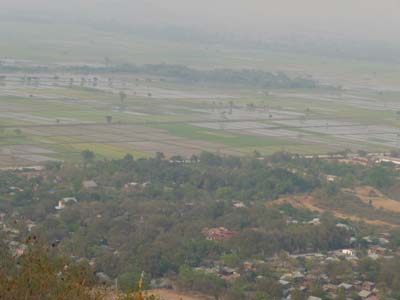
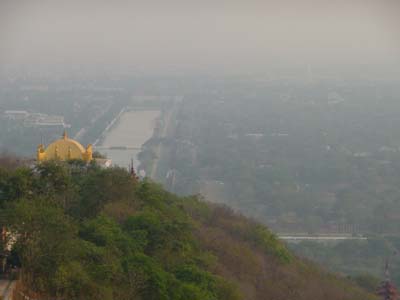
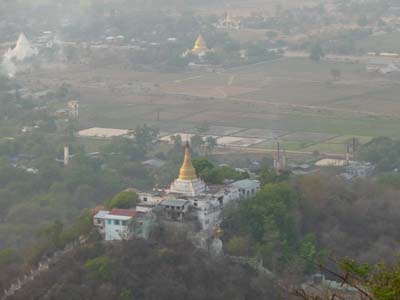
At the end of the day the climb of the Mandalay Hill’s staircases was a hard for my articulations offering a dramatic panoramic view over the surrounding plain covered with fog at that time.
Panoramic view
Mandalay
07/04/2009
Panoramic view
Mandalay
07/04/2009
Panoramic view
Mandalay
07/04/2009
In the afternoon of the 08/04
I strolled the Lp’s walking tour
Shwekyimyint Paya would date back to 1167 and would shelter an image of the Buddha devoted by prince Minshinzaw.
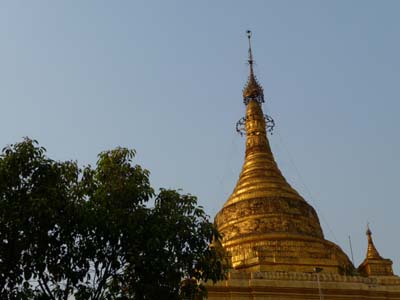
Shwekyimyint Paya
Mandalay
07/04/2009
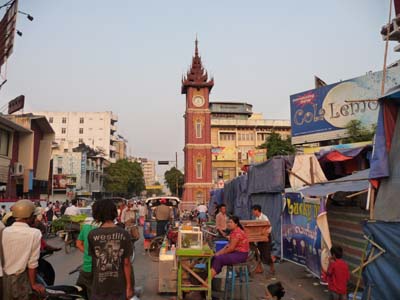
Clock Tower
Mandalay
07/04/2009
Eindawya Paya built in 1847 was often at the origin of insurrectionary movements of monks in particular against the military junta.
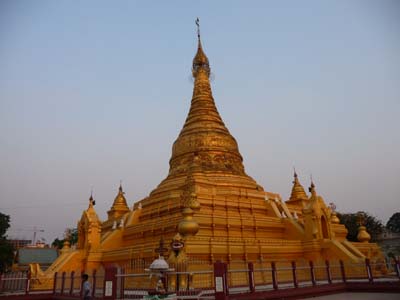
Eindawya Paya
Mandalay
07/04/2009
Setkyathiha Paya was seriously damaged by WWII.
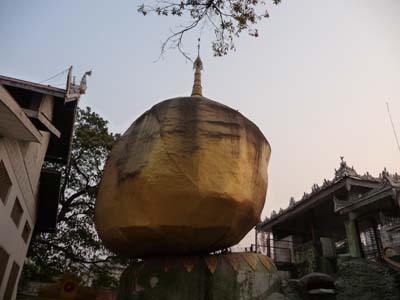
Setkyathiha Paya
Mandalay
07/04/2009
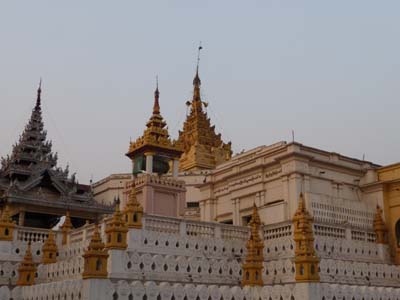
Setkyathiha Paya
Mandalay
07/04/2009
Shwe In Bin Kyaung is a monastery out of wooden teak dating back to 1895 built by going rich Chinese merchants.
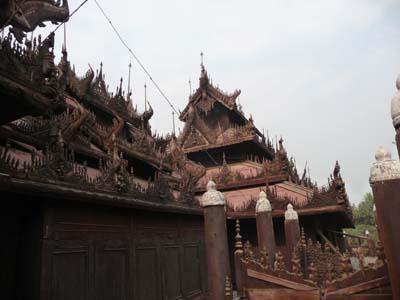
Shwe In Bin Kuaung
Mandalay
07/04/2009
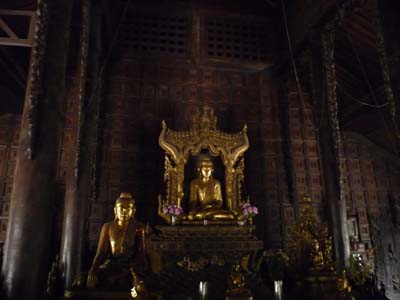
Shwe In Bin Kyaung
Mandalay
07/04/2009
Mahamuni Paya was destroyed by a fire in 1884 then rebuilt at the identical one. It shelters a bronze image of the Buddha covered with golden leafs by devotes.
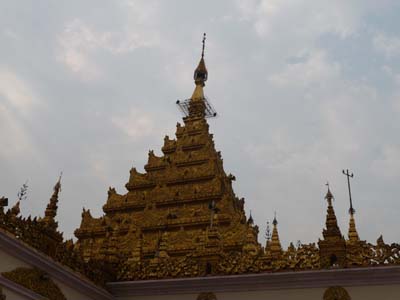
Mahamuni Paya
Mandalay
07/04/2009
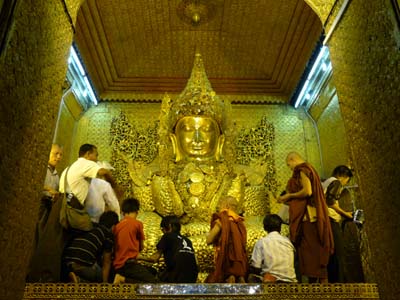
Mahamuni Paya
Mandalay
07/04/2009
Mingun
Mingun is located at 11 kilometres upriver of Mandalay at the edge of Irrawaddy River. In this lower tourist season the boat leaves only with four people. Fortunately an English old woman, so British, and a young American couple came extremely opportunely.
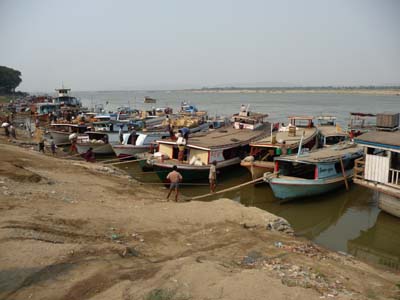
Ayeyarwady River
Mandalay
08/04/2009
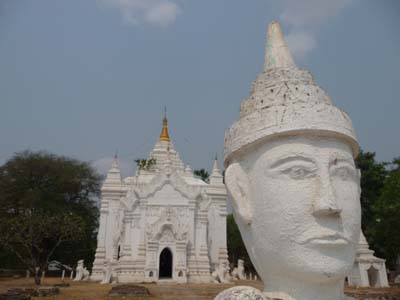
Pondaw Paya
Mandalay
08/04/2009
Mingun Paya was to be World’s largest Stupa but king Bodawpaya died before its completion in 1819.It would have reached 150 meters high. Earthquakes damaged it.
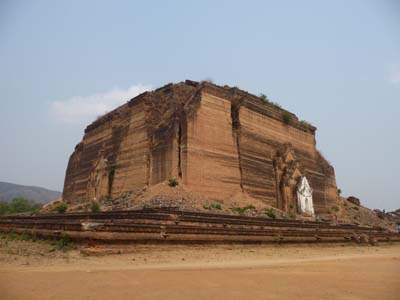
Mingun Paya
Mandalay
08/04/2009
Mingun Bell was molten for Mingun Paya, it weighs 90 tons and it is the heaviest bell in the world without crack.
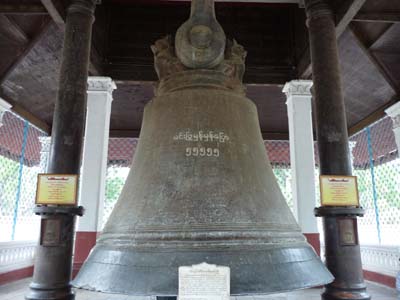
Mingun Bell
Mandalay
08/04/2009
Hsinbyume Paya was built in 1816 by king Bagyidaw in memory of his wife. It is the symbolic notation of the Mount Meru, centre of the universe in Hindu cosmology.
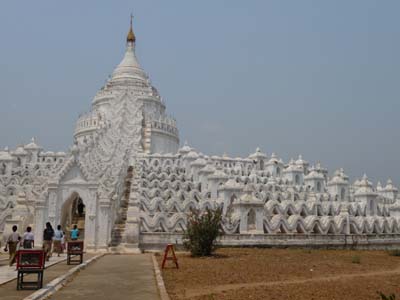
Hsinbyume Paya
Mandalay
08/04/2009
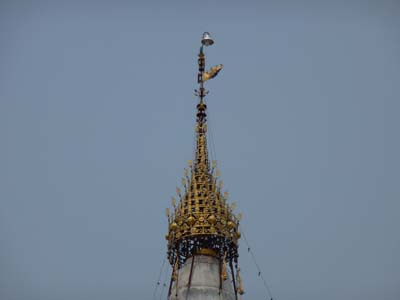
Hsinbyume Paya, Hti
Mandalay
08/04/2009
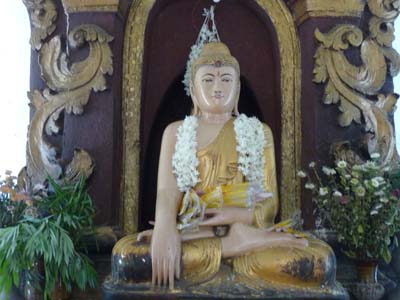
Hsinbyume Paya, Buddha
Mandalay
08/04/2009
The three old cities were visited the 09/04 by motodriver.
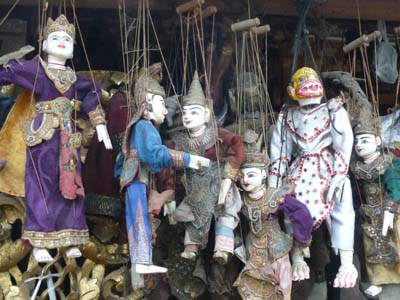
En route
Mandalay
09/04/2009
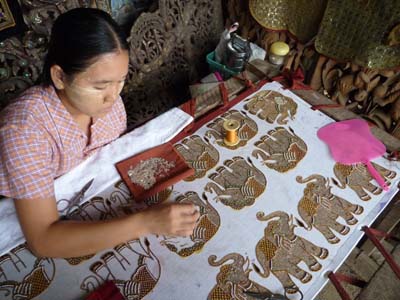
En route
Mandalay
09/04/2009
From Sagaing Hill the view makes it possible to see some of the 500 Stupas as well as the Ayeyarwady river.
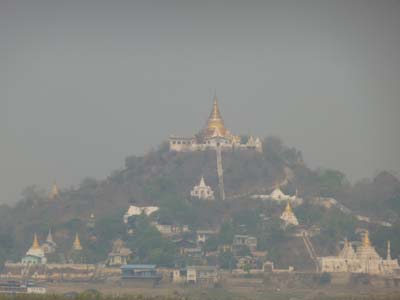
Sagaing Hill
09/04/2009
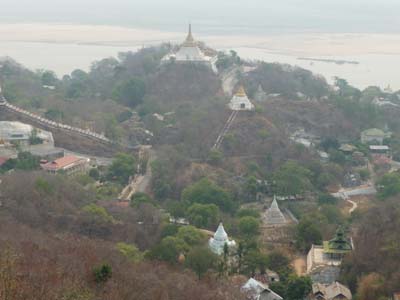
Sahaing Hill
09/04/2009
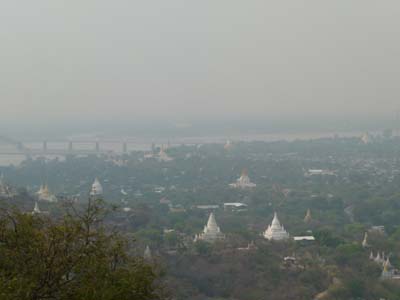
Sagaing Hill
09/04/2009
Inwa was a capital during nearly 400 years.
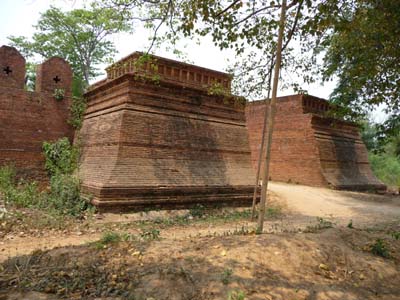
Wall's Inwa
09/04/2009
Bagaya Kyaung built out of teak is supported by 267 pillars of which the most important is 18 meters high and has a circumference of 2.7 meters wide.
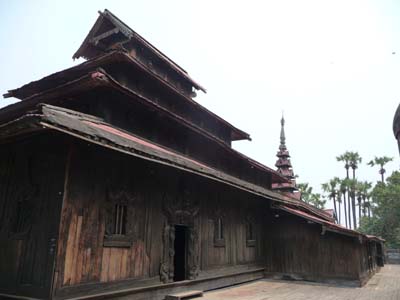
Bagaya Kyaung
Inwa
09/04/2009
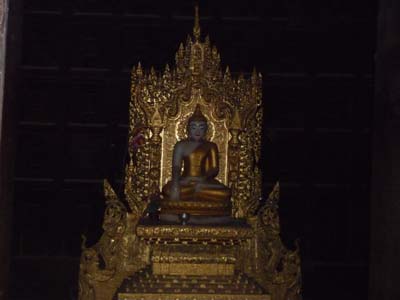
Bagaya Kyaung
Inwa
09/04/2009
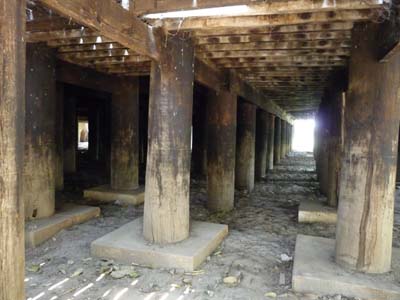
Bagaya Kyaung
Inwa
09/04/2009
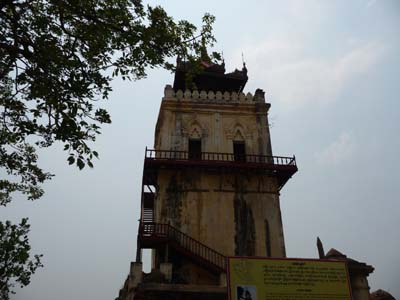
Watchtower
Inwa
09/04/2009
Maha Aungmye Bonzan is a monastery of brick and stucco built for the queen Meh Nu.
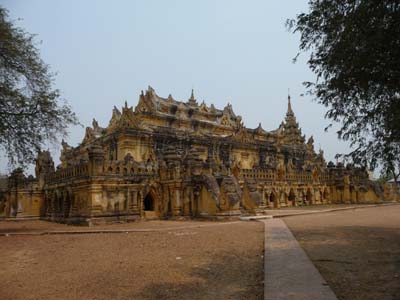
Maha Aungmye Bonzan
Inwa
09/04/2009
Amarapura was the before last capital of Burma.
A bridge, U Bein's Bridge, out of teak of 1.2 kilometres length including 1000 pillars crosses the Taungthaman lake.
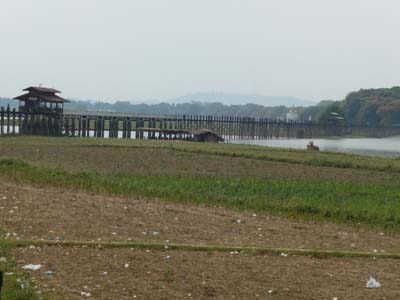
U Bein's Bridge
Amarapura
09/04/2009
Kyauktawgyi Paya was built in 1847.
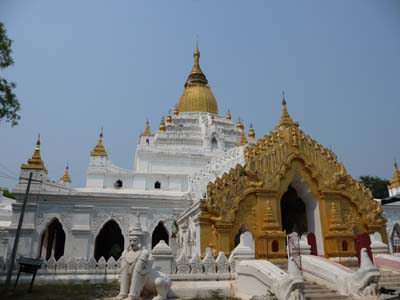
Kyauktawgyi Paya
Amarapura
09/04/2009
The 10/04 I left by bus to Monywa at the edge of Chinswin River.
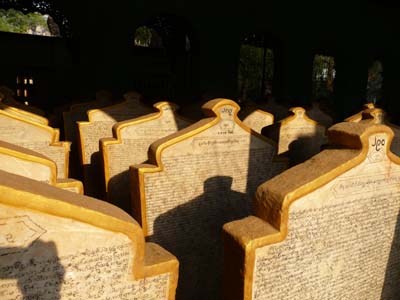
Maha Ledi Kyaung
Monywa
10/04/2009
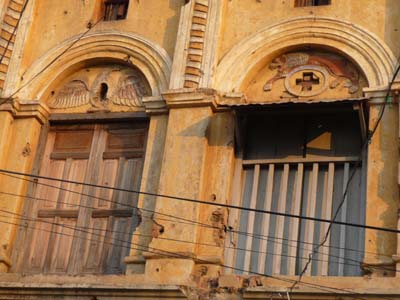
Colonial house
Monywa
10/04/2009
Thanboddhay Paya houses nearly 600000 images of the Buddha.
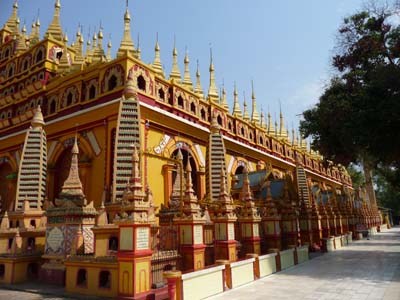
Thanboddhay Paya
Monywa
11/04/2009
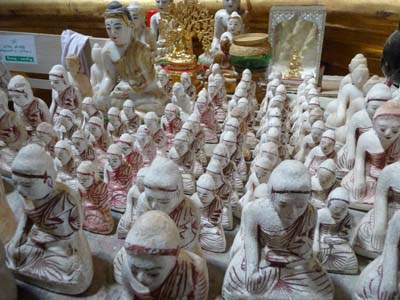
Thanboddhay Paya
Monywa
11/04/2009
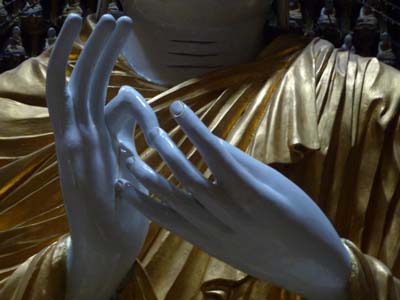
Thanboddhay Paya
Monywa
11/04/2009
On a hill away from Monywa, Bodhi Tataung, a reclining Boouddha and Aung SetKya Paya overlook the plain.
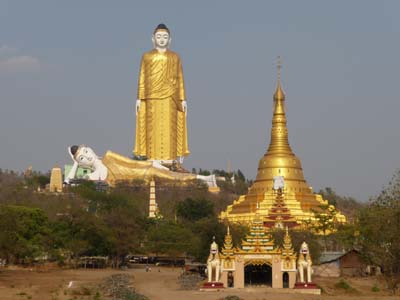
Bodhi Tataung, Reclining Buddha, Aung Setkya Paya
Monywa
11/04/2009
On the way the plain burned by the sun and of the mud tanks for the extraction of copper oxide.
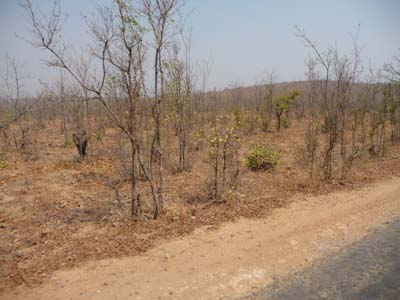
En route
Monywa
11/04/2009
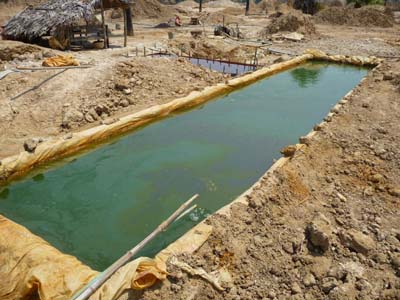
Copper extraction
Monywa
11/04/2009
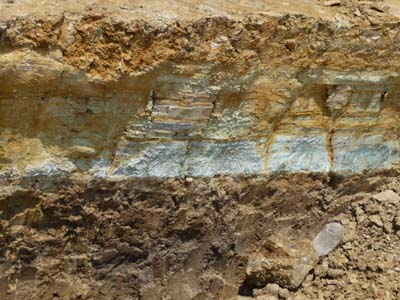
En route, copper
Monywa
11/04/2009
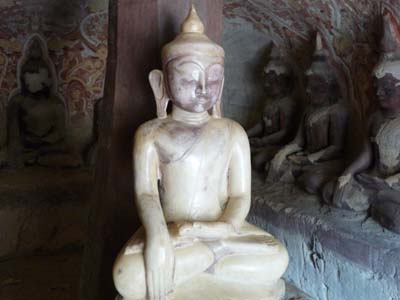
Hpo Win Daung is a long hill supposes being a reclining Buddha dug with 492 caves from the 14th to the 18th centuries with 2588 images of the Buddha and the covered walls of monochromic paintings in the 14th century and polychromic ones in the 18th century. The site has the majesty neither of Ellora nor of Ajanta in India.
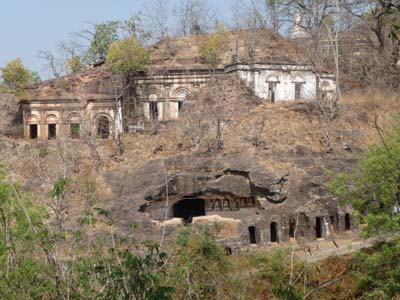
Hpo Win Daung
Monywa
11/04/2009
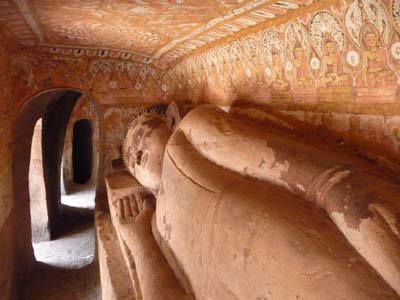
Hpo Win Daung
Monywa
11/04/2009
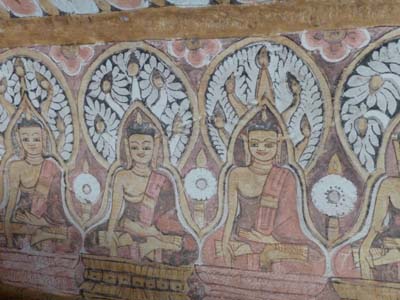
Hpo Win Daung
Monywa
11/04/2009
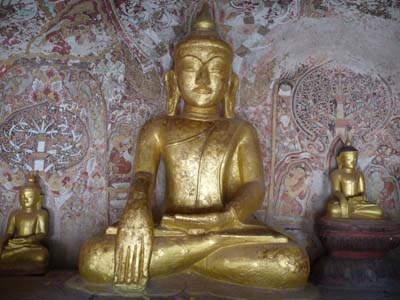
Hpo Win Daung
Monywa
11/04/2009
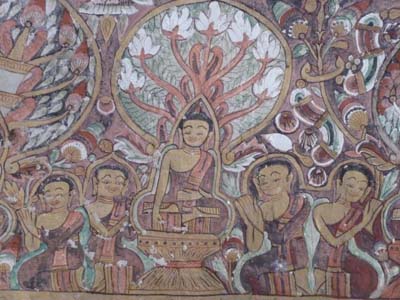
Hpo Win Daung
Monywa
11/04/2009
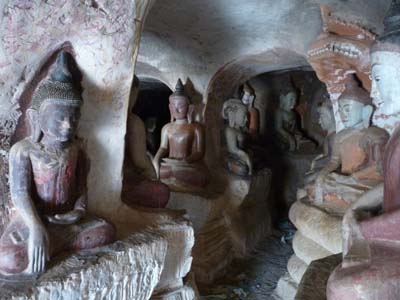
Hpo Win Daung
Monywa
11/04/2009
Hpo Win Daung
Monywa
11/04/2009
Bagan
From 12 to 16/04
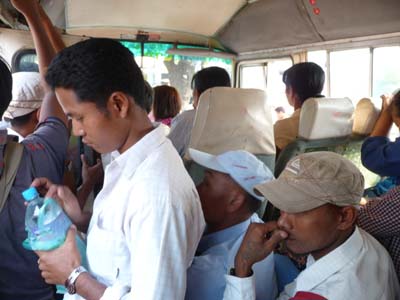
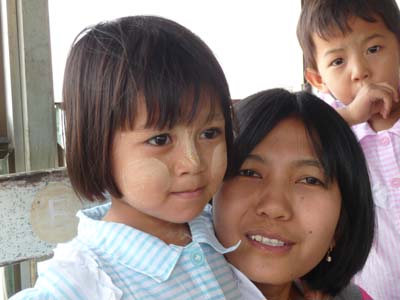
The way towards Bagan was by bus and by boat on Ayeyarwady River. The bus was a great moment of sardine tin. I arrived in the early afternoon at the jetty of Nyaung U where I took a trishaw to go to the hotel. As of my arrival I organized the transfer by plane to Heho (Inle Lake) and the visit to Mt Popa.
Bus to Bagan
en route
12/04/2009
Dans le bateau sur l'Ayeyarwady
en route
12/04/2009
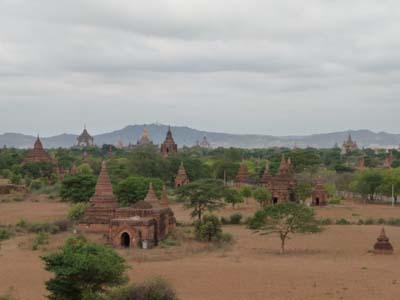
Two long days by bicycle with an intense heat on stony and sometimes sandy tracks were not enough to see the 4400 temples of bricks and of stucco built for 230 years from 1044 to 1287 that is to say on average 20 temples per annum. To represent the site the Lp suggests imagining that all medieval cathedrals of Europe were built on the Island of Manhattan without other buildings. Indeed palaces and dwelling houses out of wooden disappeared by erosion of time, of climate and of frequent earthquakes in the area.
Compared to our visit in 1987 monuments were restoring, statues re-gilded; the site appeared less afflicted, better organized. Many hotels and restaurants were built. Local tourism is very developed especially in this period of the Water Festival (Thingyan) from the 13 to April 16. The game consists in throwing water buckets on passers by, in Mandalay they are powerful water hoses. During my stay I succeeded in avoiding this sprinkling by making detours.
I visited 22 temples; it is not possible to publish all pictures.
La plaine
Bagan
13/04/2009
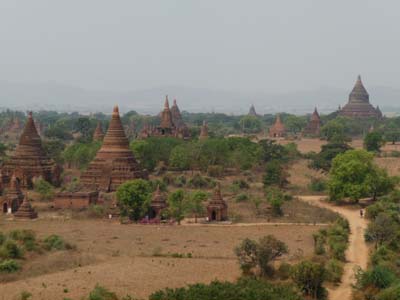
Le site
Bagan
13/04/2009
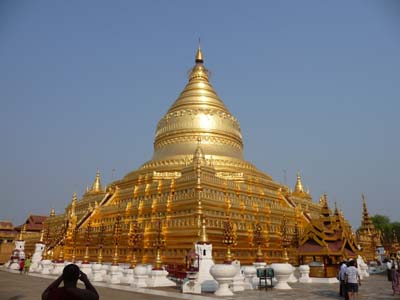
Shwezigon Paya
Bagan
13/04/2009
Shwezigon Paya, Hti reflection in water hole
Bagan
13/04/2009
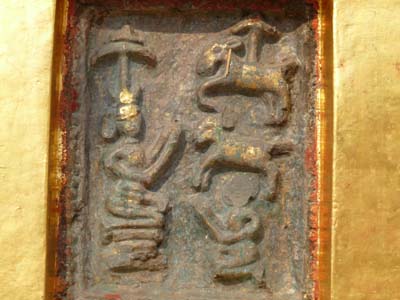
Shwezigon Paya, Jataka
Bagan
13/04/2009
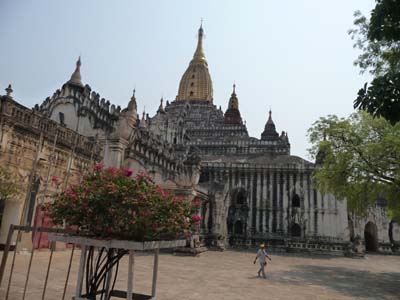
Ananda Pahto
Bagan
13/04/2009
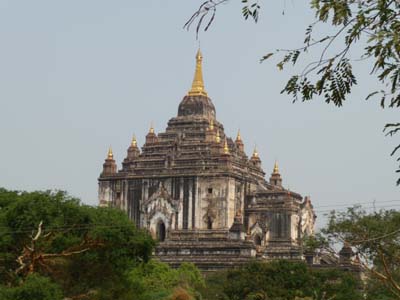
Thatbyinnyo Pahto
Bagan
13/04/2009
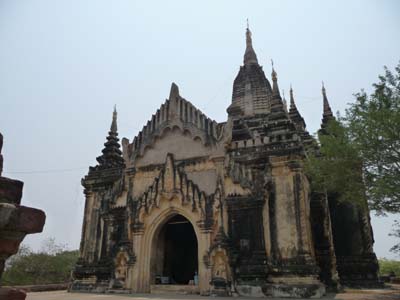
Shwegugyi
Bagan
13/04/2009
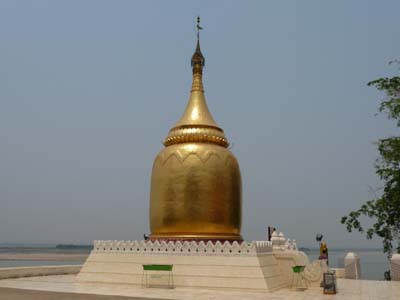
Bupaya Pagoda
Bagan
13/04/2009
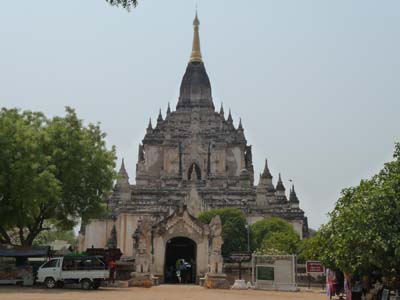
Gawdaw Palin Pahto
Bagan
13/04/2009
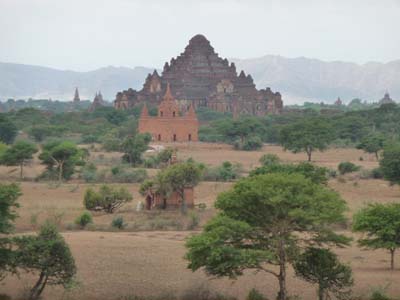
Dhamma Yanghi Pahto
Bagan
13/04/2009
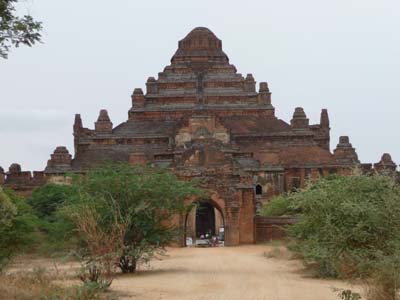
Dhamma Yanghi Pahto
Bagan
13/04/2009
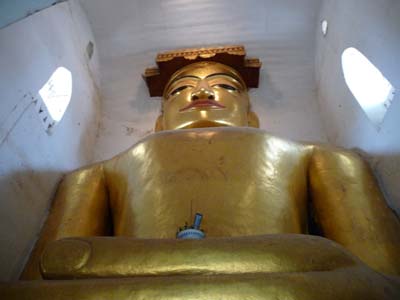
Manuha Pahto
Bagan
13/04/2009
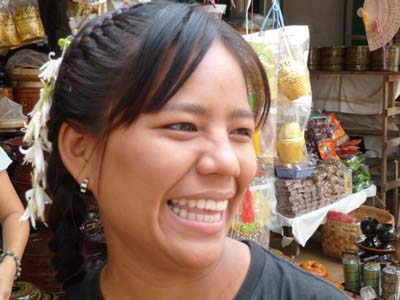
Portrait
Bagan
13/04/2009
Mont Popa
The 14/04
We were four people from the hotel in a minibus. The road towards the Mt Popa has a good quality of coating. We were often stopped by barriers of the Water Festival with sometimes aggressive people requiring money.
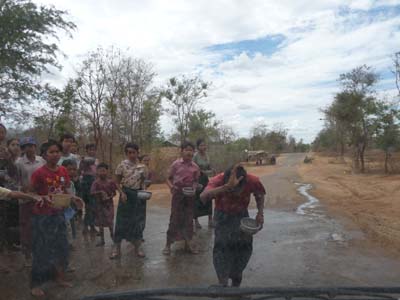
Water Festival
en route
14/04/2009
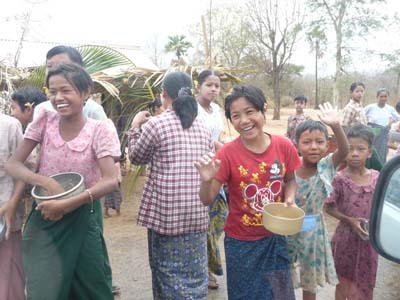
Water Festival
En route
14/04/2009
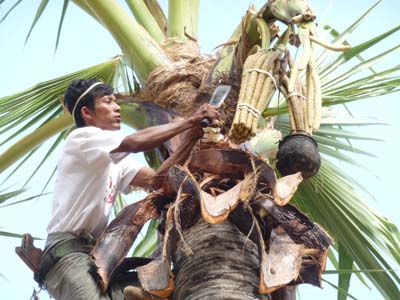
Flower of palm tree
en route
14/04/2009
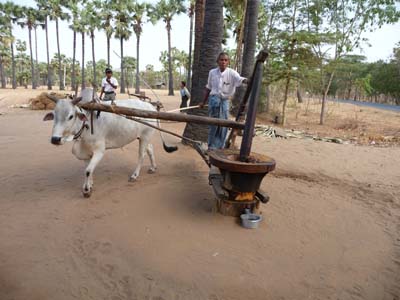
Oil mill
En route
14/04/2009
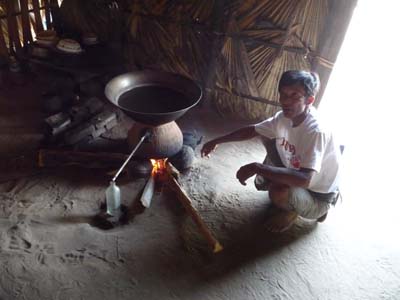
Alembic
en route
14/04/2009
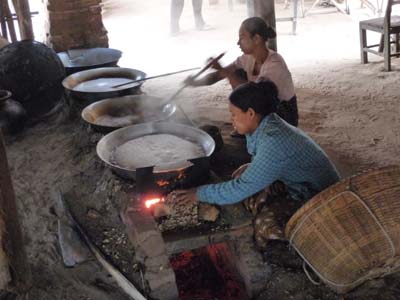
Reduction of juice
En route
14/04/2009
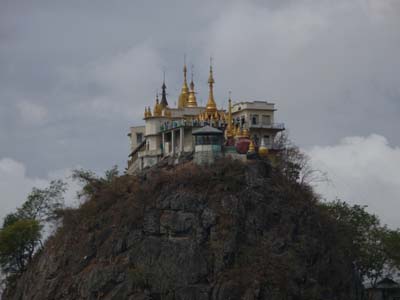
Culminating at 737 meters high above the level of the surrounding plain Mt Popa was there is two miles years the cone of a volcano now extinct. It is sometimes regarded as Mt Olympus of Myanmar and the most important animist temple, Nat.
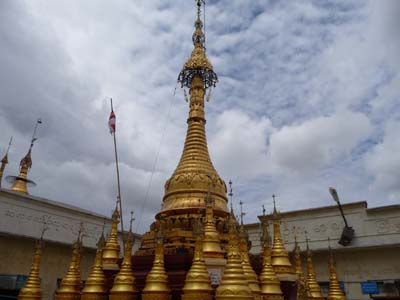
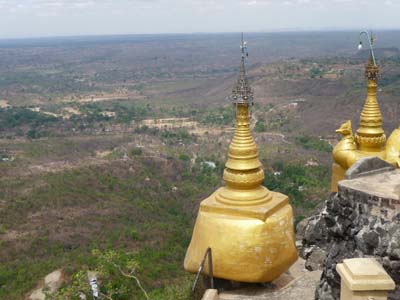
Of course the rise by a staircase is made without shoes in dirtiness and piss of monkey; it is feeling reluctant – What is this religion which requires such a humiliation! At the top there is a whole of temples without particular attraction but with a splendid view on the surrounding countryside.
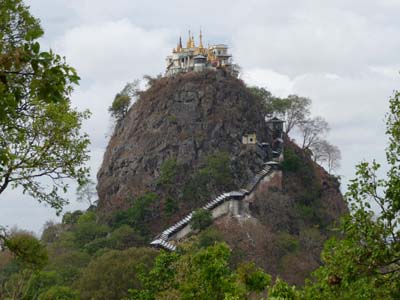
The cone
Mt Popa
14/04/2009
The temples
Mt Popa
14/04/2009
Stupa
Mt Popa
14/04/2009
Panoramic view
Mt Popa
14/04/2009
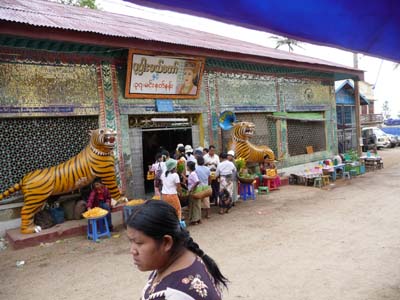
At the foot of the staircase the Nat temple where I attended a ritual dance rhythm by a traditional music. The dancer was supposed to be in trance.
Nat temple
Mt Popa
14/04/2009
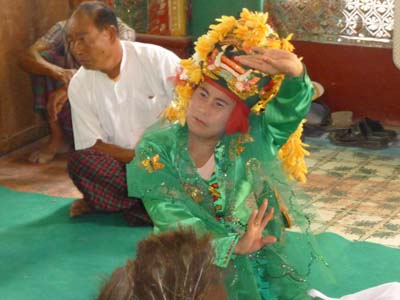
Ritual dance
Mt Popa
14/04/2009
Pindaya Caves
The 16/04
I took an Air Bagan’ flight to Heho via Mandalay, the plane flights several daily rotations, Yangon, Bagan, Mandalay, Heho, and Yangon. Then I rented a taxi, much expensive, to go to Pindaya. At the hotel I organized my transfer to Nyaungshwe (Inle Lake). Alas it was always the Water Festival – it did not have there a bus before the 18/04-. I decided with the manager of the hotel to go there in motodriver! The manager was my driver on 91 kilometres for three hours. It was very painful for my behind.
Pindaya Caves is visible by far by the lift structure. There would be more than 8000 images of the Buddha. The city is located at the edge of Boutalake. It is without sights, it is the end of the world in a red ground landscape well cultivated.
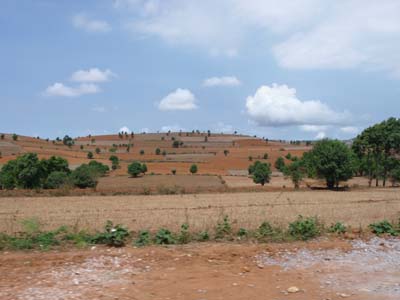
Landscape
en route
16/04/2009
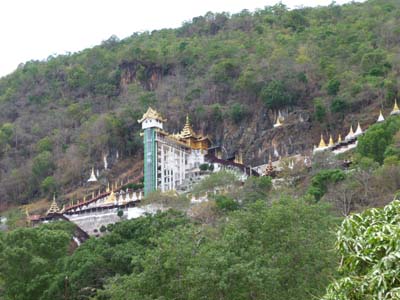
Caves
Pindaya
16/04/2009
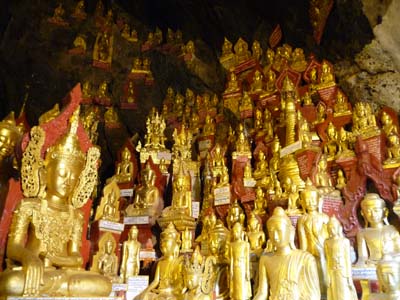
Thousands Buddha
Pindaya Caves
16/04/2009
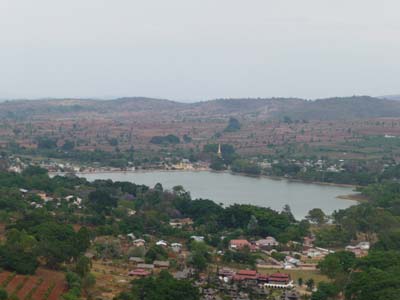
Boutalake
Pindaya
16/04/2009
From 17/04 to 19/04
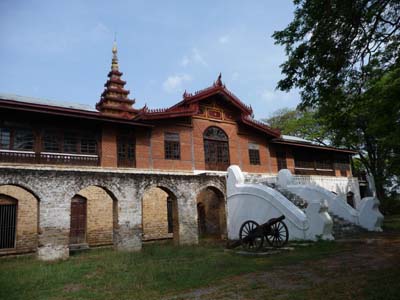
Buddha museum
Nyaungshwe
17/04/2009
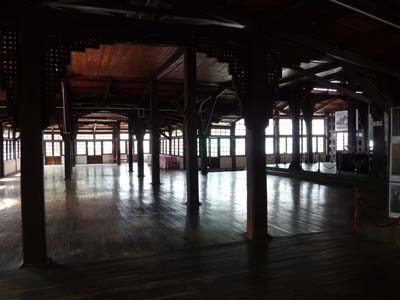
Shan palace
Nyaungshwe
17/04/2009
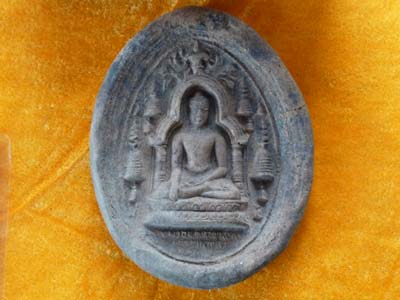
Pyu votive tablet
Buddha museum
17/04/2009
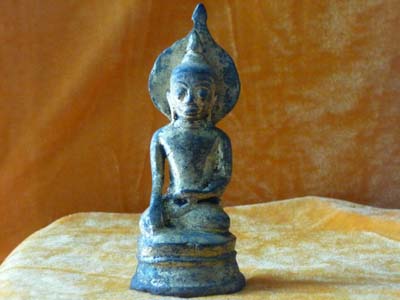
Pyu Buddha image
Buddha museum
17/04/2009
The 18/04 was a long day in boat on the lake. Motor boats replaced those driven while paddling with the left leg rolled up around the paddle to have free hands to operate the bow net.
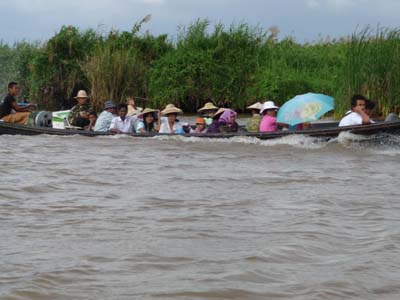
Boat people
Inle Lake
18/04/2009
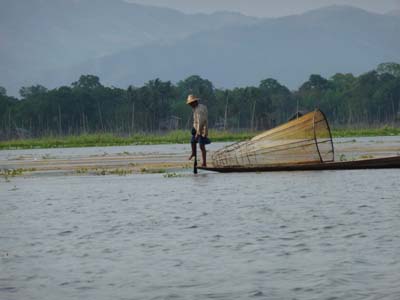
Traditional boat
Inle Lake
18/04/2009
Many tourist shops invaded the edge of channels with unavoidable long neck women, manufacture of umbrella, silver jewels etc. without forgetting the floating market, Ywama.
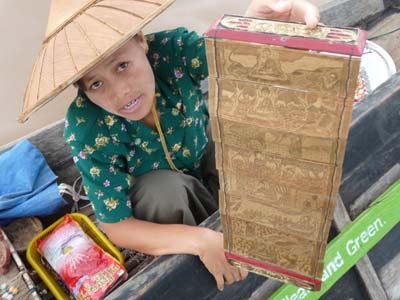
Floating market
Inle Lake
18/04/2009
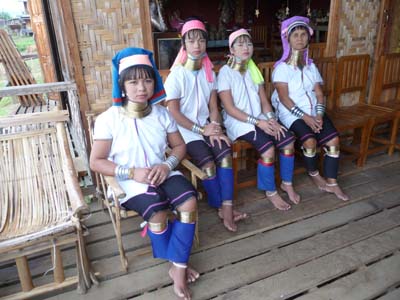
Long neck women
Inle Lake
18/04/2009
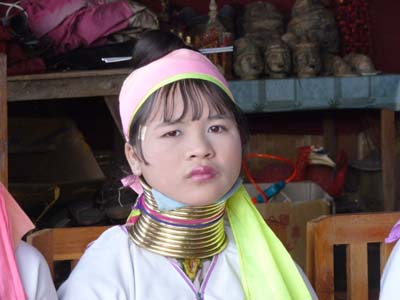
Long neck woman
Inle Lake
18/04/2009
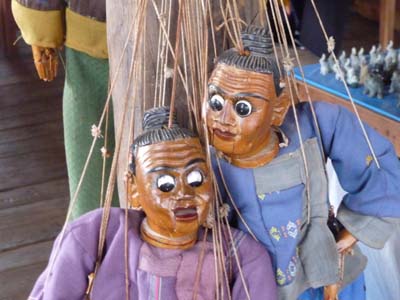
Puppets
Inle Lake
18/04/2009
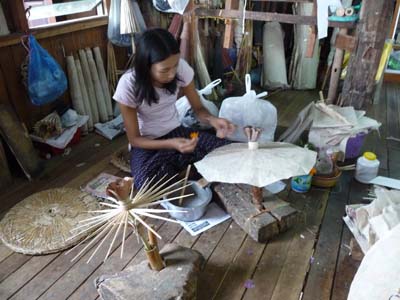
Umbrella
Inle Lake
18/04/2009
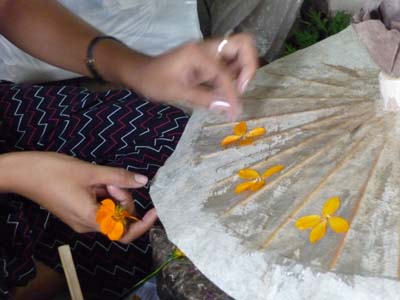
Umbrella
Inle Lake
18/04/2009
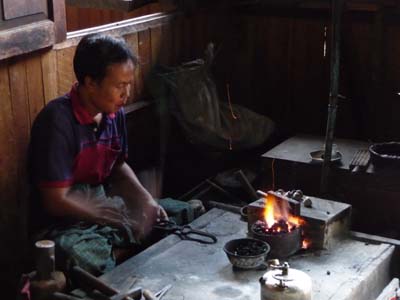
Silversmith
Inle Lake
18/04/2009
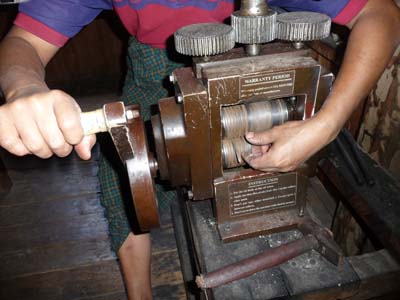
Laminoire
Inle Lake
18/04/2009
Indein is a village which conceals a collection of Shan Stupas eroded by the climate escaping the restoration. Their sight gives an impression of end of the world in a luxuriant tropical forest.
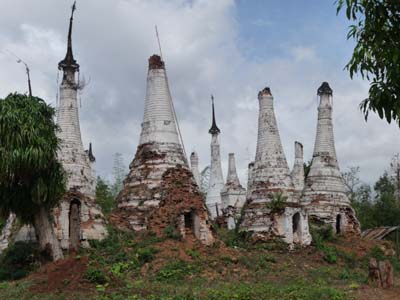
Indein
Inle Lake
18/04/2009
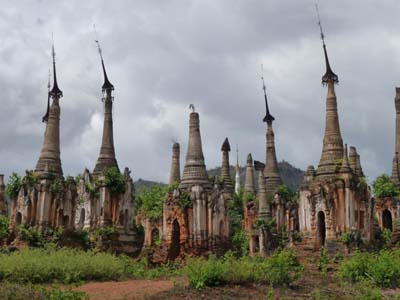
Indein
Inle Lake
18/04/2009
Phaung Daw Co Paya houses five images of the Buddha covered with golden lea by devotees since centuries making them formless.
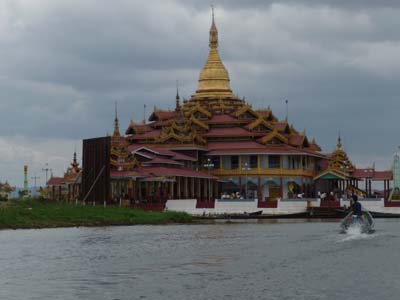
Phaung Daw Co Paya
Inle Lake
18/04/2009
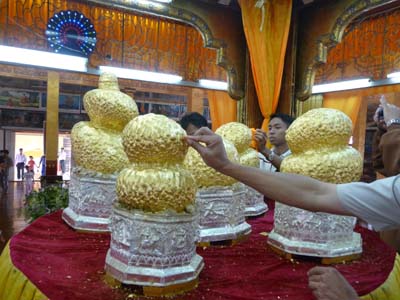
Phaung Daw Co Paya
Inle Lake
18/04/2009
Nga Hpe Chaung, Jumping Cat, this monastery out of wooden teak exhibits images of the Buddha of Shan, Tibetan and Awa styles.
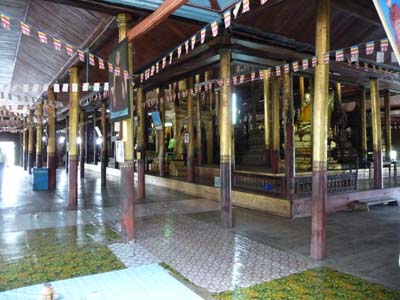
Nga Hpe Chaung
Inle Lake
18/04/2009
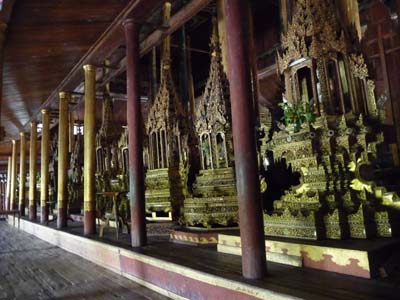
Nga Hpe Chaung
Inle Lake
18/04/2009
From 21 to 22/04
The 20/04 towards 12:00 I took a night bus to Yangon at the crossroads of Shwenyaung. The night was very painful at the back on the bumping roads with a failing air-conditioning. I slept little due to many stops for the rest of the driver, to sprinkle the aircon condenser and for passport control. I arrived in the 21/04 early morning at the bus terminal in Yangon where I jumped in time in the first bus to Pyay where I arrived towards 12:30, that is to say 24 hours on the move.
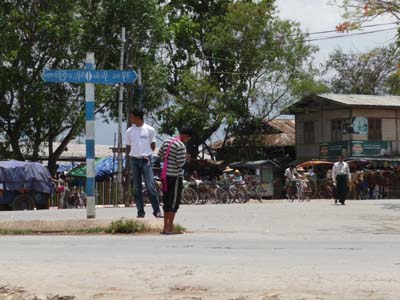
Junction
Shwenyaung
20/04/2009
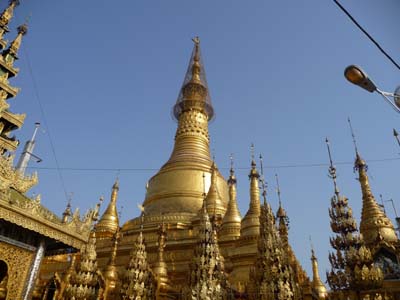
Shwesandaw Paya
Pyay
21/04/2009
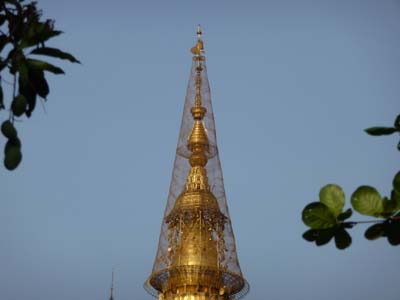
Shwesandaw Paya, Hti
Pyay
21/04/2009
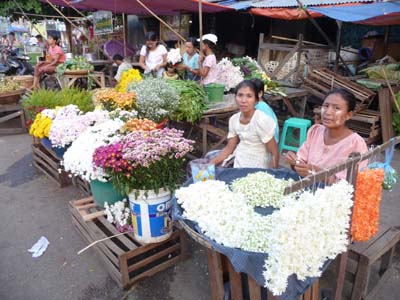
Market
Pyay
21/04/2009
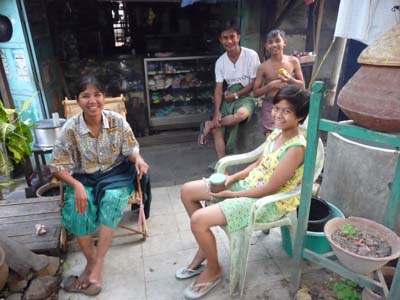
People in street
Pyay
21/04/2009
Thayekhittaya
The 22/04
The object of my visit was an old Pyu city-state, Sri Ksetra in Pali, from the 3rd to the 10th century AD. I booked a taxi to visit it. As in Bagan it is about a whole set of temples in ruin dispersed in the countryside.
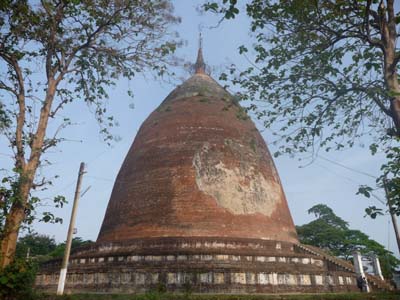
Paya Gyi Paya
Pyay
22/04/2009
The site map with a circular enclosing wall of the city and in the centre of which the quadrilateral of the royal palace.
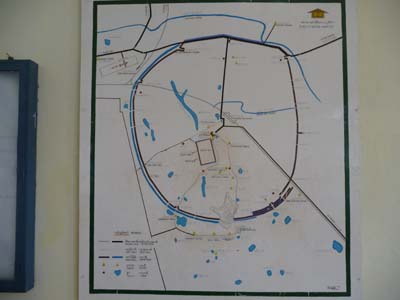
Museum, map
Sri Ksetra
22/04/2009
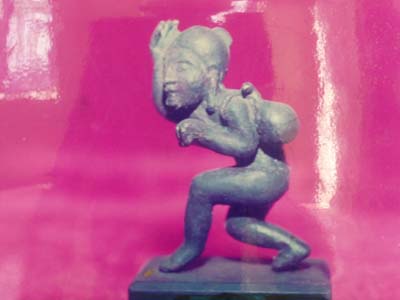
Danceur
Sri Ksetra
22/04/2009
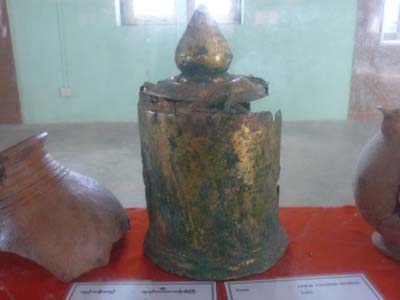
Museum, burial urn
Sri Ksetra
22/04/2009
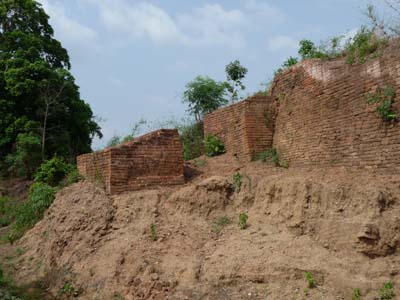
Rahenta Gat
Sri Ksetra
22/04/2009
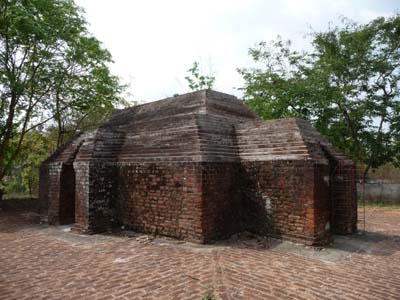
Rahenta Cave temple
Sri Ksetra
22/04/2009
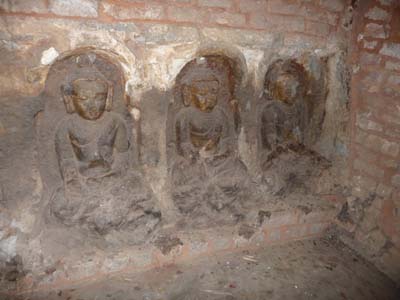
Rahenta Cave temple, Buddha images
Sri Ksetra
22/04/2009
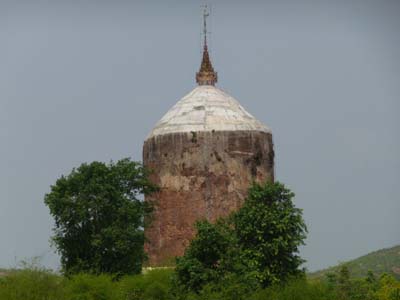
Baw Bawgyi Paya
Sri Ksetra
22/04/2009
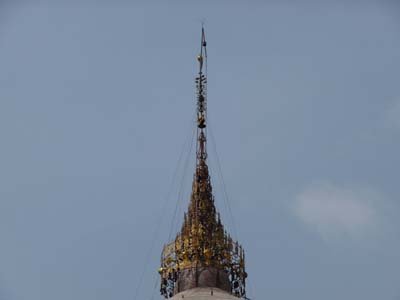
Baw Bawgyi Paya, golden Hti
Sri Ksetra
22/04/2009
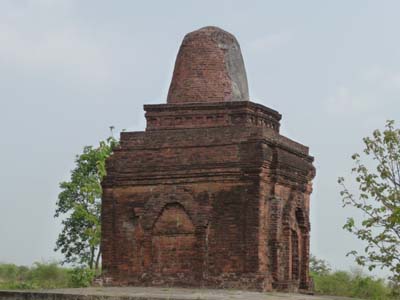
Bebe Paya
Sri Ksetra
22/04/2009
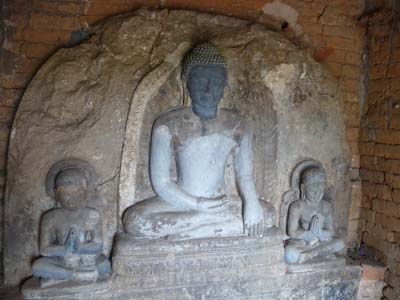
Bebe Paya, Buddha image
Sri Ksetra
22/04/2009
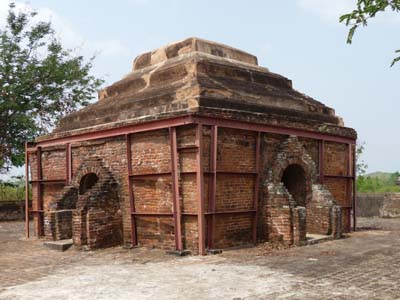
Lamyethna Paya
Sri Ksetra
22/04/2009
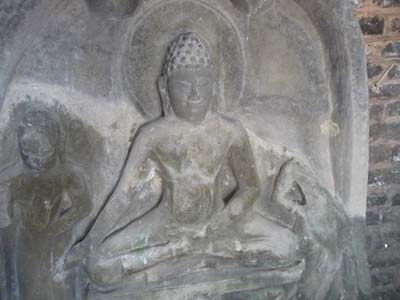
Lamyethna Paya, Buddha image
Sri Ksetra
22/04/2009
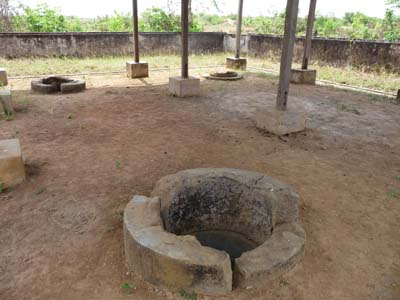
Cemetery
Sri Ksetra
22/04/2009
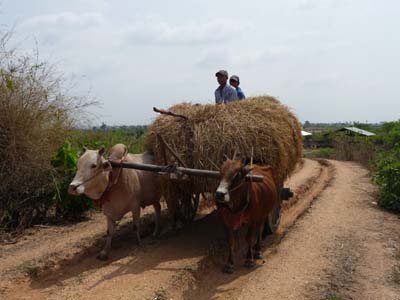
Ox-cart
Sri Ksetra
22/04/2009
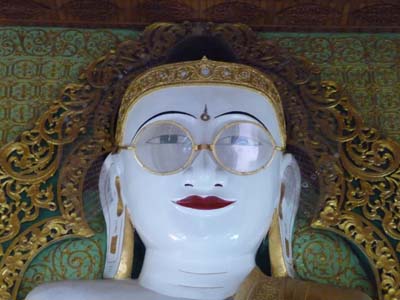
Shwedaung,
Shwemyetman Paya,
Paya of Golden Spectacles
Sri Ksetra
22/04/2009
The 23/04 I took again the bus to Yangon in opposite direction where I arrived at the beginning of afternoon to remain in a hotel of good standing, Guest Care Hotel, offering an unobstructed view on Shwedagon Paya, picture on the cover and in the Gallery. The following day I travelled by plane to Kuala Lumpur where I spent a night before flying away the 25/04 to Manila. The visit of the Philippines is another story.
