-- Trip in the Philippines
Introductory notes
Manille
Le 25 au 28/04, du 08 au 10/05, le 24/05
The 24/04 I left Yangon to Kuala Lumpur where I arrived around 5:00p.m.. In Tourism Information I got informed about the possibilities of lodging for one night having been obliged to pass the control of immigration to recover my luggage. I reserved a room in Allson Hotel at half an hour by taxi away from the airport.
The 25/04 the flight to Manila at 10:20 was delayed for technical reasons then it was announced that there was a change of plane and terminal. The flight took off at 2:40 p.m. to arrive in Manila about 6:10 p.m.. I had chosen a hotel in the Ermita district in the centre of the city. I discovered that in the Philippines it is necessary to pay the bill before “going up”. I did not have enough pesos I should to go to a DAB. Finally around 8:00 p.m I took possession of a room. My first impression, while coming from Burma, was to discover a country very Occidentalized and with a climate appreciably more lenient.
In this Sunday 26/04 I began the visit of the city with Manila Intramuros. The fortress was built in 1571 by Miguel Lopez de Legazpi on the Moslem ruins, enemy hereditary of Spanish, at the mouth of Pasig River. It was invaded several times by Chinese pirates, by Dutch, English, American, and Japanese and finally destroyed at the time of WWII. The battle of Manila at the time of the reconquest made more death than the bomb over Hiroshima. Indeed the city was entirely destroyed by the American bombardments. According to travellers at the end of the 19th century it was as resplendent as Paris. There remain only the walls and the bastions surrounding a perimeter of 64 hectares.
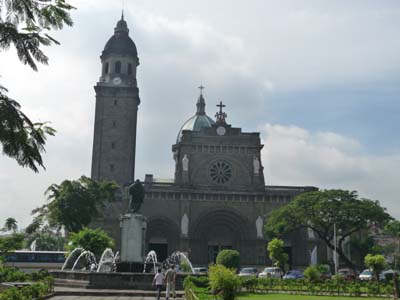
Cathédrale
Manila
26/04/2009
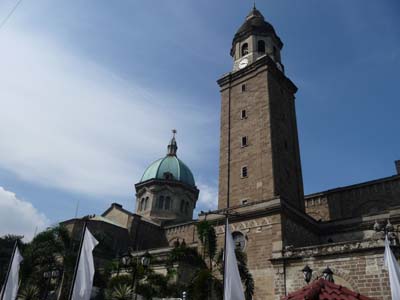
Cathedral
Manila
26/04/2009
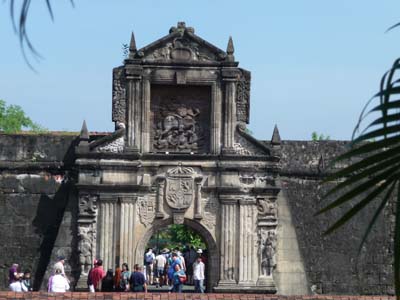
Fort Santiago, Gate
Manila
26/04/2009
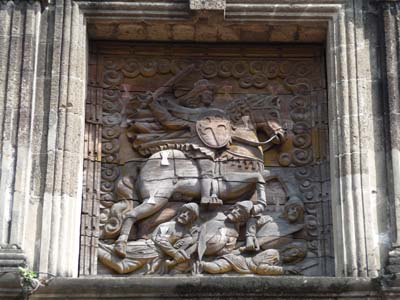
Fort Santiago
Manila
26/04/2009
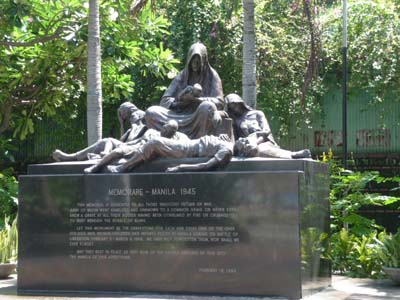
Memorare Manila 1945
Manila
26/04/2009
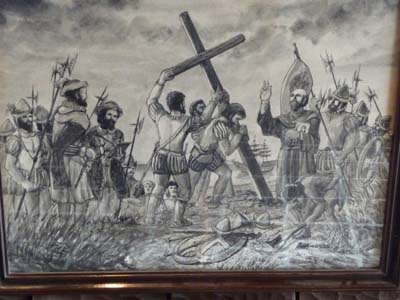
The cathedral dates back to 1951. Fort Santiago overhangs the river with a monumental gate. Walking my way I passed in front of Memorare Manila of 1945. The church San Agustin of 1587 was saved, its cloister houses an interesting museum of religious paintings and liturgical object such this virgin out of ivory with the Chinese face as well as a picture of the unloading of Lopez Legazpi in 1571..
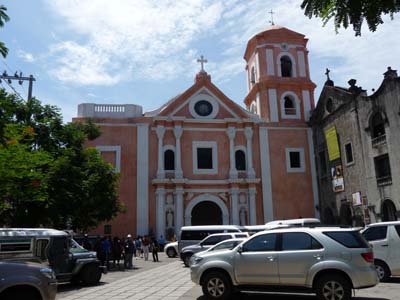
San Agustin
Manila
26/04/2009
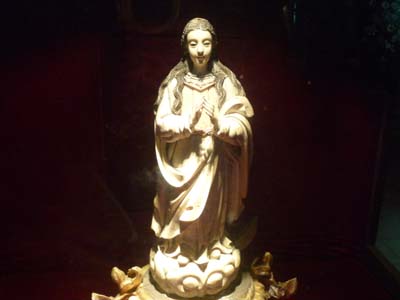
Virgin, Chinese-looking
Manila
26/04/2009
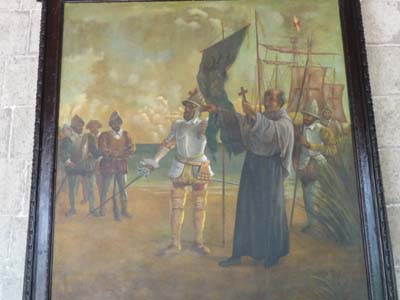
Lopez de Legazpi
Manila
26/04/2009
Casa Manila is an ancient house entirely restored with pieces of furniture whose some pieces are of the school of Chicago.
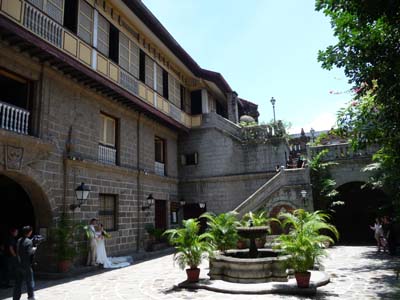
Casa Manila
Manila
26/04/2009
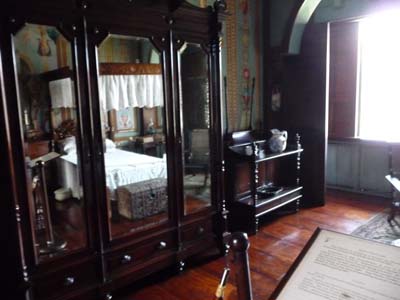
Casa Manila
Manila
26/04/2009
Bahay Tsinoy exhibts in diorama the important part played by the Chinese community in the city development. They are called themselves Chinoys or Tsinoys. Many Mestizos, interbreeding with Chinese, occupy of the governmental responsibilities. Cory Aquino is a half-caste by her Chinese mother.
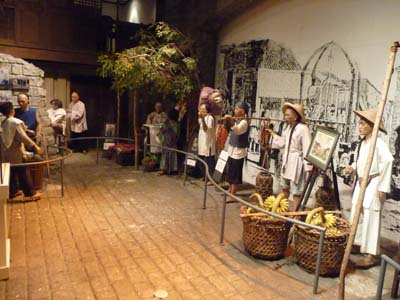
Baha Tsinoy
Manila
26/04/2009
I strolled in districts of the city in the search of vestiges. Only the frontages of church were rebuilt with scattered materials the other parts are modern.
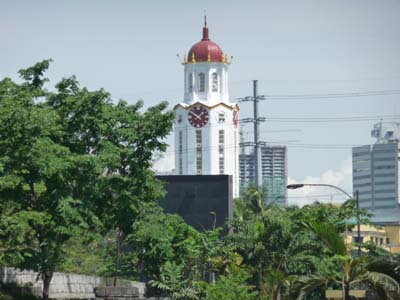
Clock Tower
Manila
26/04/2009
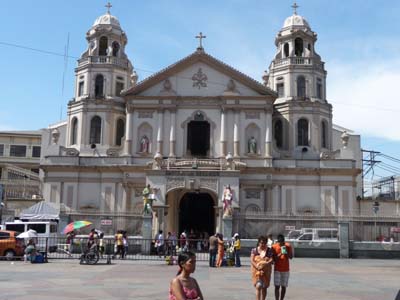
Quiapo Church
Manila
26/04/2009
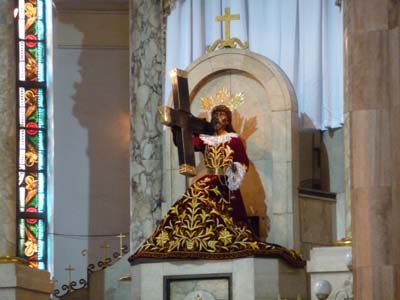
Quiapo Church, Black Nazarene
Manila
26/04/2009
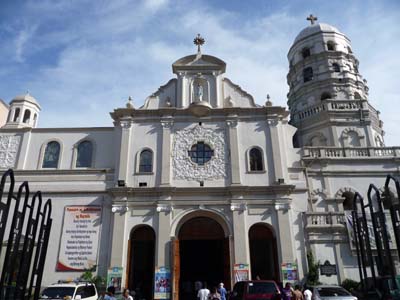
Santa Cruz
Manila
26/04/2009
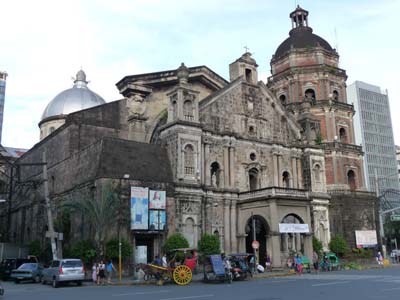
Binondo Church
Manila
26/04/2009
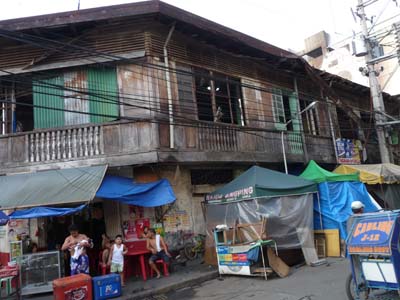
San Nicolas, old wooden house
Manila
26/04/2009
Metropolitan Theatre, Art Deco 1930, is in the state of a ruin occupied by beggars. City Hall. The National Museum of the Philippines has been closed for restoration for several years. Rizal Park, in memory of Dr. Jose Rizal was executed by Spanish in December 1896. The architectural revival saw emerging from the concrete buildings such Cultural Center of the Philippines by Leandro Locsin.
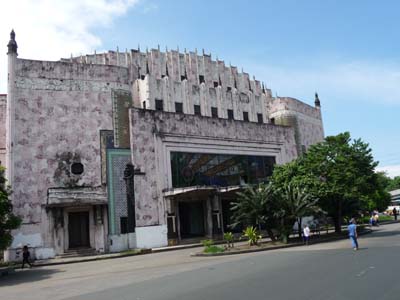
Metropolitan Theater
Manila
27/04/2009
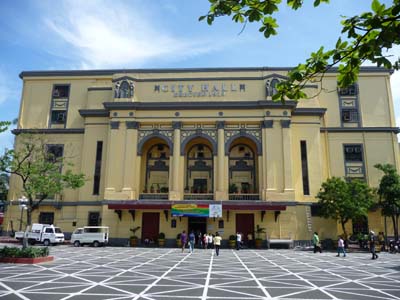
City Hall
Manila
25704/2009
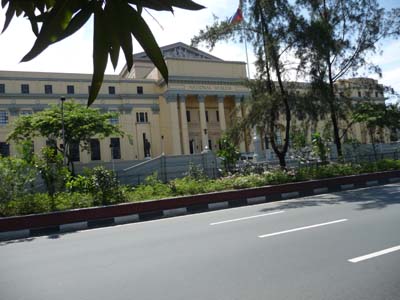
National Museum of The Philippines
Manila
27/04/2009
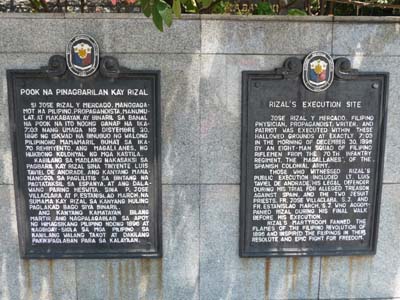
Rizal's execution site
Manila
27/04/2009
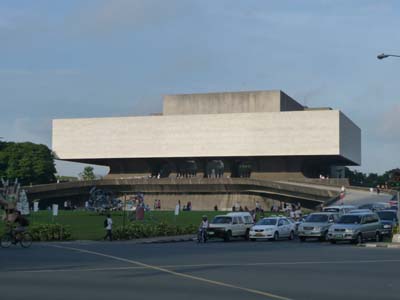
Cultural Center of the Philippines
Manila
27/04/2009
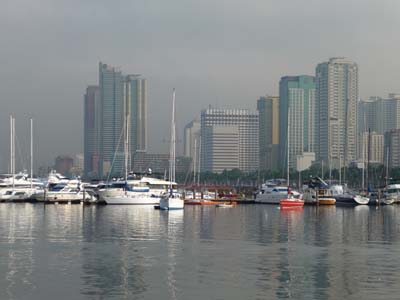
Manila Bay
Manila
27/04/2009
The island of Corregidor is located in the bay of Manila at approximately 48 kilometres. It was the theatre of engagements in 1941 during the Japanese invasion and in 1945 at the time of the second battle. I visited it with a packed tour. The General Douglas MacArthur pronounced a sentence become famous during his escape to Australia: “I shall return”. It was one day very instructive recalling me that the War of the Pacific was bloodier than the War in Europe.
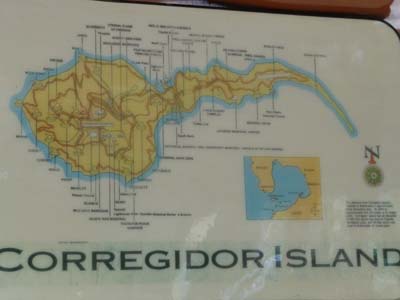
Corregidor Island
Manila
28/04/2009
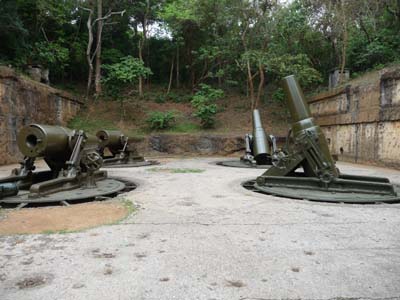
Corregidor
Manila
28/04/2009
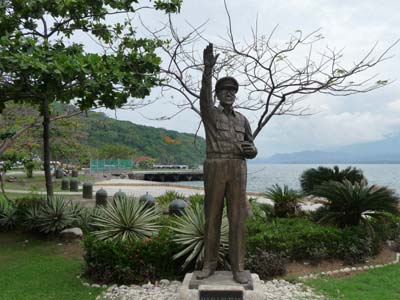
I shall return
Manila
28/04/2009
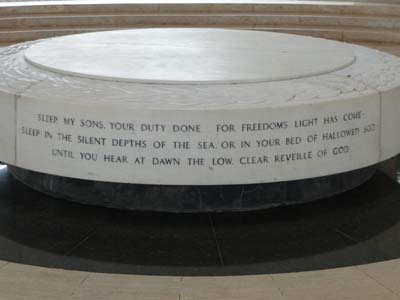
Corregidor, Pacific War Memorial
Manila
28/04/2009
At the time of my return from the North of Luzon, to see will infra, I remained two days in Manila to visit two remarkable museums. The National Museum of the Filipinos people was designed by the American architect Burham of the school of Chicago and was carried out by Pearson, of the Ecole des Beaux Arts de Paris, with an engineering and design department of Manila. The master piece is the wreck of San Diego, Spanish Galleon, sank off in 1600 at the time of a battle with a Dutch vessel. A floor is devoted to prehispanic art with in particular funerary objects.
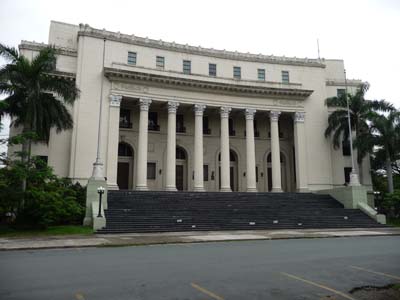
National Museum of the Filipinos people
Manila
09/05/2009
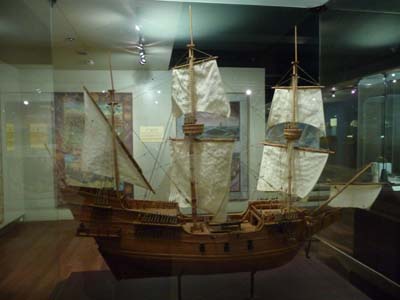
San Diego
Manila
09/05/2009
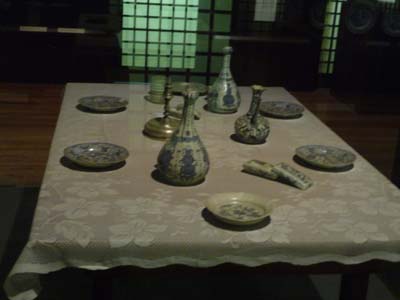
San Diego
Manila
09/05/2009
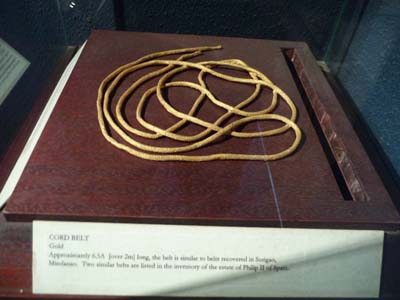
San Diego
Manila
09/05/2009
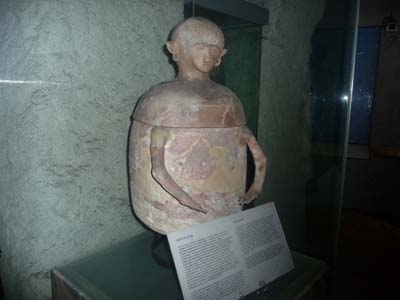
Funerary urn
Manila
09/05/2009
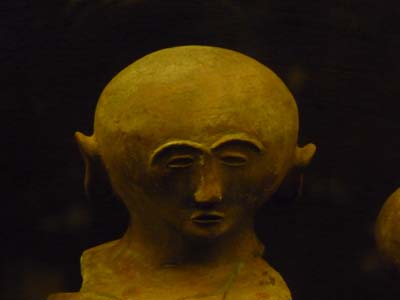
Funerary urn
Manila
09/05/2009
Ayala Museum is located in the business district at the crossroads of the Ayala and Makati avenues, old runaway of a local airport. It is a harbor of greenery with a small church in the centre of a raised park. On several floors an exhibition to topics, Crossroads of Civilizations exposes objects coming from tombs and excavations of origin Chinese, Indian, Thailand, Vietnamese, and Khmer showing that the Philippines were at the crossroads of important maritime trade route well before the arrival of Spanish. In addition sixty dioramas commemorate sixty major events from prehistory to the independence of the Philippines
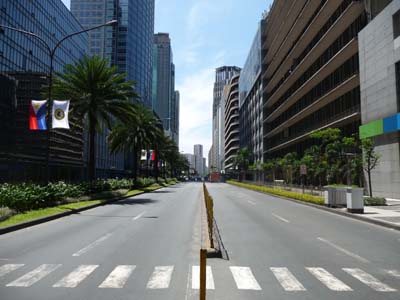
Ayala avenue
Manila
10/05/2009
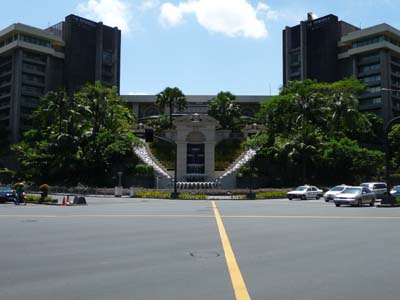
Makati avenue
Manila
10/05/2009
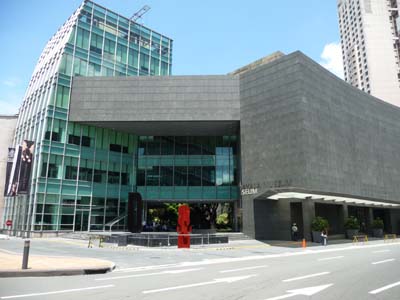
Ayala Museum
Manila
10/05/2009
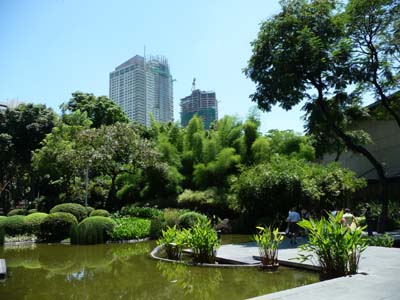
Greenbelt
Manila
10/05/2009
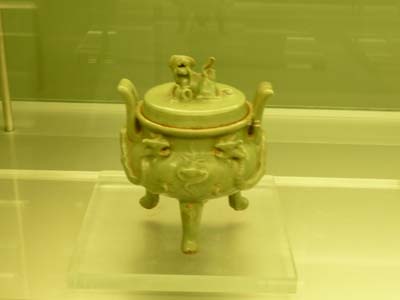
Ayala Museum, Longquan 14th
Manila
10/05/2009
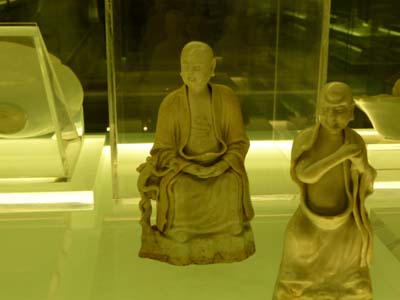
Ayala Museum, Jingdzhen 14th
10/05/2009
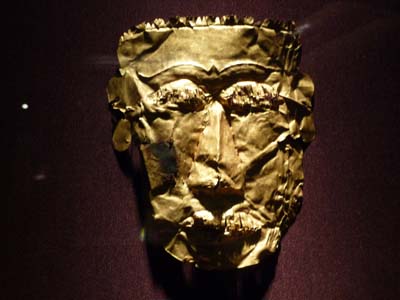
Ayala Museum, Golden funerary mask
Manila
10/05/2009
La Cordillera de Luzon
Vigan, Ilocos
The first visit in the north of Luzon was the 29/04 for the town of Vigan where the Japanese invasion troops unloaded in 1941 but the city was saved. It is only testifying to the architecture of the Hispanic time. The bus Farinas left to 9:30 to arrive in Vigan 407 kilometres away from Manila about 19:00 stop included. I visited the city the following day although I make a rapid excursion in the night.
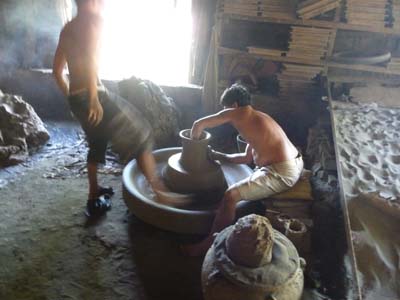
Pottery Factory
Vigan
30/04/2009
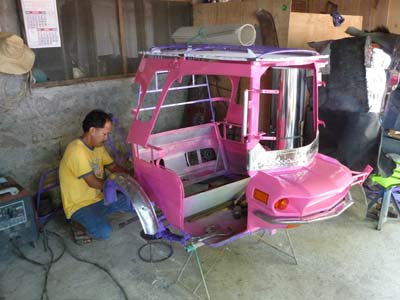
Tricycle maker
Vigan
30/04/2009
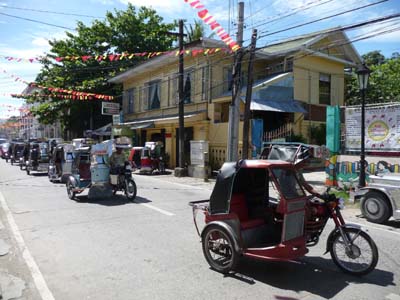
Tricycles traffic
Vigan
30/04/2009
The architecture of the Vigan’s houses is a synthesis of Mexican and Chinese style with Philippines decorations. The windows are furnished not with panes but with capiz-shell. The ground floor is in masonry whereas the first floor is out of wooden teak.
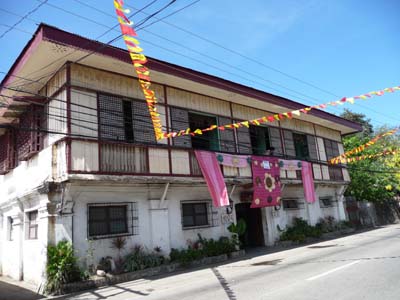
Crisolo Museum
Vigan
30/04/2009
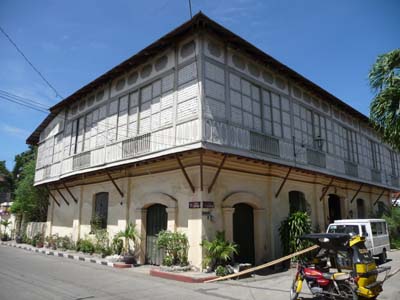
Quema House
Vigan
30/04/2009
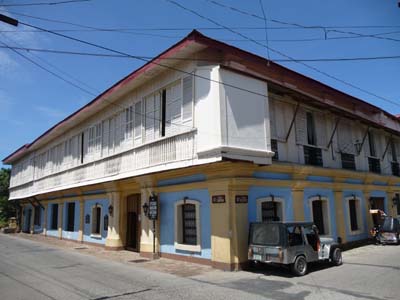
Syquia Mansion
Vigan
30/04/2009
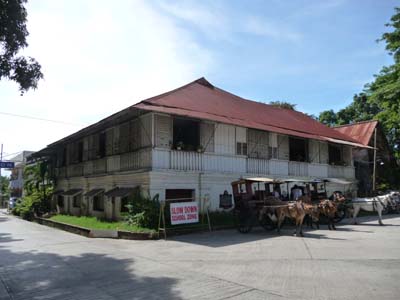
Jose Burgos House
Vigan
30/04/2009
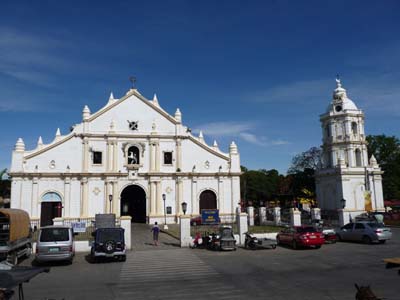
Cathedral St Paul, 1574
Vigan
30/04/2009
Baguio, it took five hours by bus to go from Vigan to Baguio where I arrived at the end of the morning. In the afternoon I visited the district of the market. The city is polluted and noisy by jeepneys. In spite of the rational design with gardens by Burnham in 1903 the city extended anarchically on the side of surrounding mountains. Located at 1400 meters of altitude it was the holiday of the American troops until the Japanese invasion.
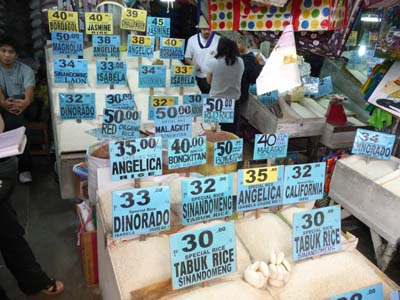
Market, Rice prices
Baguio
01/05/2009
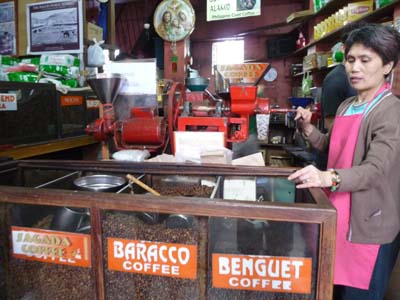
Market, coffee
Baguio
01/05/2009
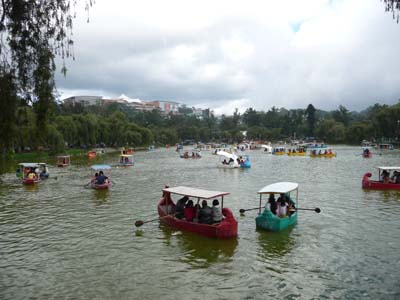
Burham's garden, lagoon
Baguio
01/05/2009
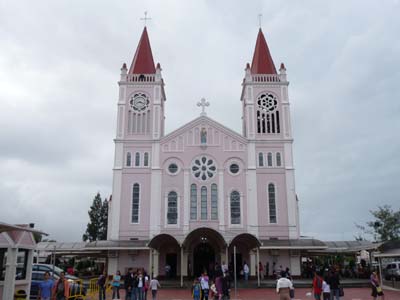
Cathedral, 1920
Baguio
01/05/2009
Mountain Province Museum exhibits dioramas of the tribes of Cordillera and a floor is devoted to the Japanese co-operation since 1903!
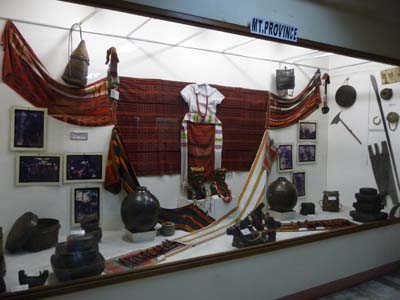
Mountain Province Museum
Baguio
02/05/2009
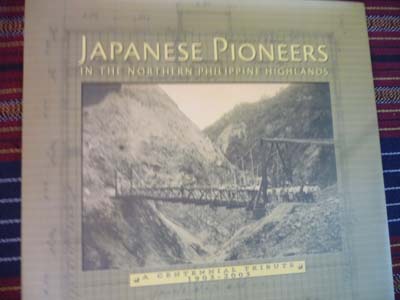
Mountain Province Museum
Baguio
02/05/2009
Tam Awan Village was created at approximately 4 kilometres away in the mountain as an open air museum with dwellings of mountain tribes. The project is creditable but the infrastructure of visit is not up to it. The St Louis University Museum is very interesting by the objects of the daily life of the mountain tribes.
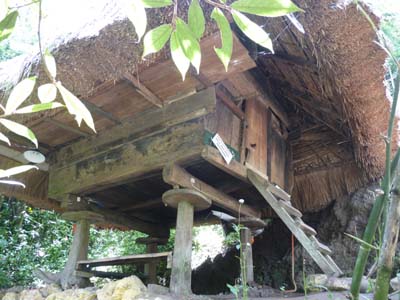
Tam Awan Village
Baguio
02/05/2009
Sagada, at 1400 meters of altitude, is at 145 kilometres away that to say six hours by bus where I arrived the 03/05 at the end of the morning to install me in Guesthouse. I was recorded at the DOT then I left to discover sites.
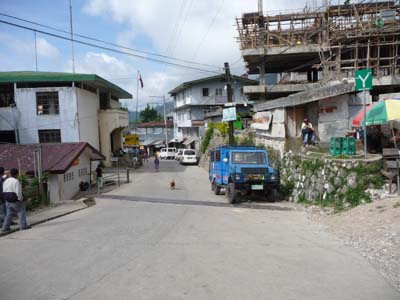
Village
Sagada
03/05/2009
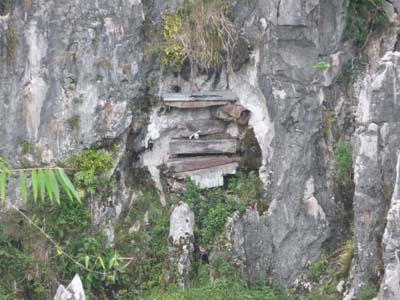
Sugong Hanging Coffins
Sagada
03/05/2009
2 - Lumiang Burial Cave contains several hundreds of coffins of which the oldest would be old of more than five hundred years. They do not contain mummies, only the bones of the late ones.
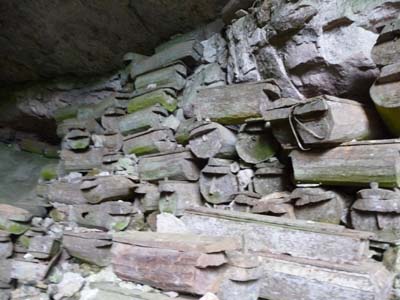
Lumiang burial cave
Sagada
03/05/2009
3 - Sumaging Cave dug in the sandstone it communicates with a network of surrounding caves. I explored only the entry.
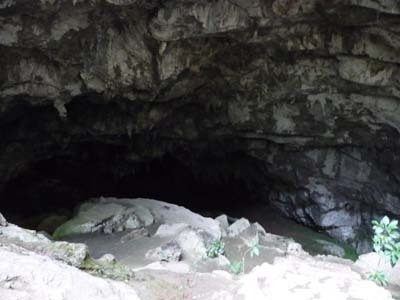
Sumaging cave
Sagada
03/05/2009
The following day 04/05 I undertook a long walk by beginning at St Mary's Episcopal Church then the cemetery at the top of a hill dominating the plain.
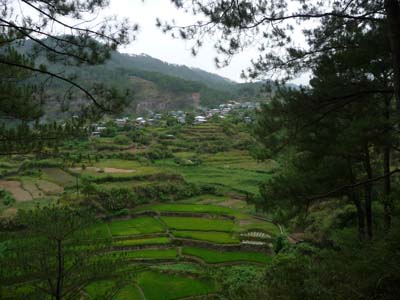
Landscape
Sagada
03/05/2009
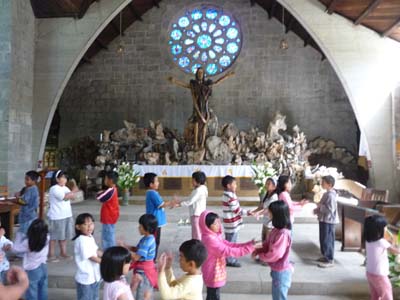
St Mary's Episcopal Church
Sagada
04/05/2009
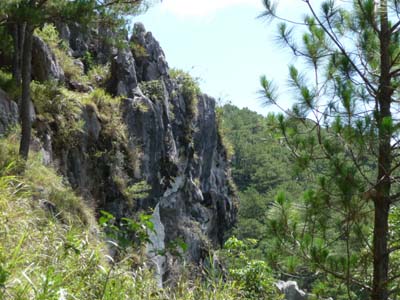
Echo Valley
Sagada
04/05/2009
Consequently I reconsidered my steps to stroll on the driving path to Kiltepan Peak, 1636 meters of altitude. I lunched frugally in front of a splendid landscape of covered medium mountains of thorn-bush. I began again the track about 13:00 to try to find Bokong Fall. Alas I turned back not having any information nor map of the area indicating the tracks to be followed. I returned to the hotel much chagrined. Around 16:00 I went to the cybercafé at the corner. In short a long day of salutary walk with landscape resting out of any pollution.
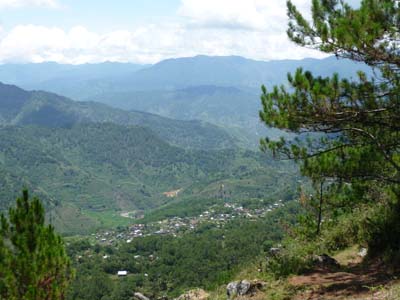
Landscape at lunch
Sagada
04/05/2009
The 05/05 I left Sagada to Bontoc by jeepney where I wanted to see the museum for its miniatures of mountain houses and especially for an extraordinary collection of photographs in black and white of the Fifties putting in situation the various tribes as head-hunters. It is one of the most enthralling museums of the area.
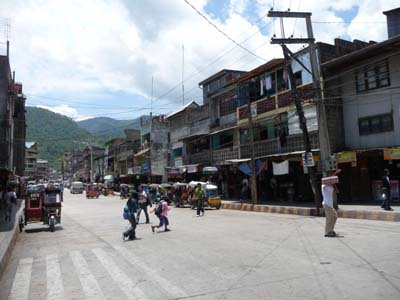
Main street
Bontoc
05/05/2009
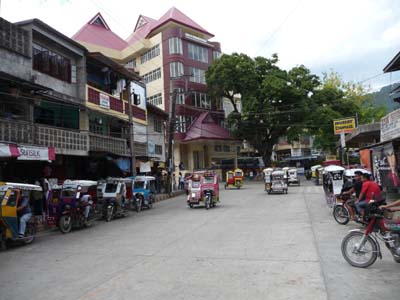
Main street
Bontoc
05/05/2009
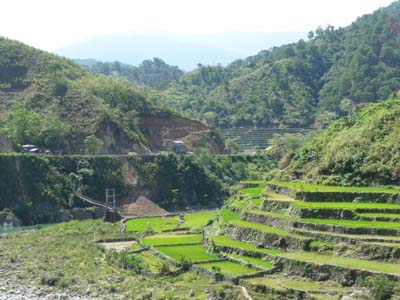
En route
Bontoc
05/05/2009
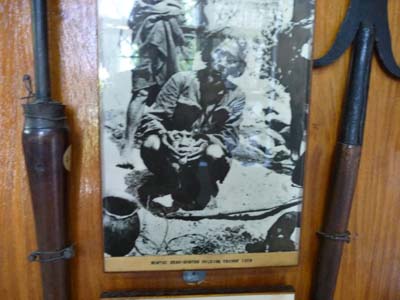
Museum, head-hunter
Bontoc
05/05/2009
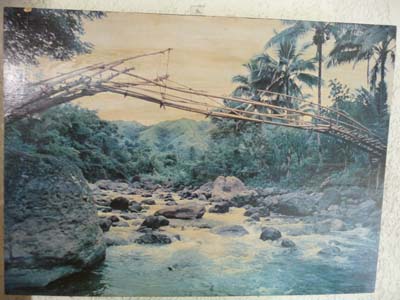
Bridge
Bontoc
05/05/2009
The following day 06/05 I took a bus jolting to Banaué where I arrived in the rain beating at 1400 meters of altitude. Moreover the city was in the clouds. Of course I paid a visit to the local museum which is interesting but without more. The exhibited objects are in windows deprived of lighting. It is necessary to want to visit it, it is true that the culture is deserved.
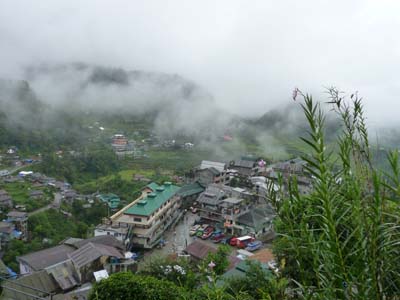
Landscape
Banaue
06/05/2009
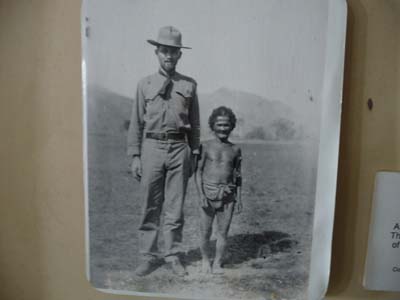
Museum negrito!
Banaue
06/05/2009
After midday I left in excursion to Hapao by tricycle in the rain to see the rice cultures in terraces. The road being crossed by a landslide I continued on foot; as I would further say it, it was ill omen, but I did not know it. The driver of the tricycle had omitted to inform me. The rice cultures in terraces are not the most spectacular, those of Batad, registered by the inheritance world, are completely in the clouds and require more than nine hours of walk outward journey and return. The 07/05 the rain persisting I decided not to go to Batad in spite of the malavized advice of the tricycle driver.
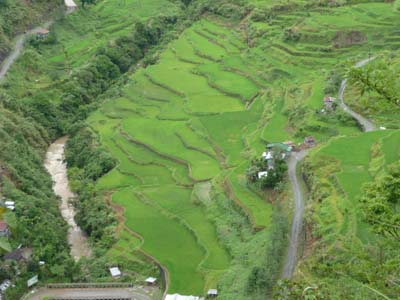
Rice terraces
Banaue
06/05/2009
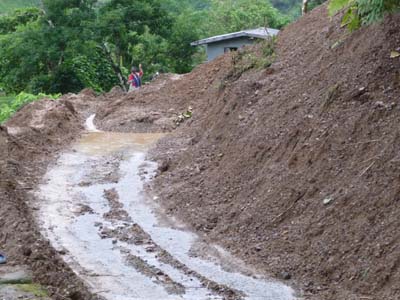
Hapao
Banaue
06/05/2009
I spent the day by reading in the common room of the hotel awaiting the night bus bringing me back to Manila. It left around 20:00 in the rain, soon landslides appeared applicant the vigilance of the driver. Around 9 p.m. a landslide occurred in front of the bus which stopped without being able to cross it. The driver parked the bus to ensure the safety of the costumers; it moved it several times landslides occurred laterally. The night was long at the edge of the road. In the early morning we went in recognition, it was necessary to go obviously, the bus could not carry on its road. Villagers brought to us hot and soft drinks. About 10:00 the driver after phone contacts informed us that machines of civil engineering would spend several days to open the road. He advised us to leave with our luggage to find jeepneys beyond the landslides. It was indeed the case after approximately two kilometres of walk in the mud and the crossing over four to five landslides. Finally we travelled by a bus at the junction of the road from Banaué and from Siantiago shortly after Solano. We arrived in Manila the 08/05 about 19:30 that is to say nearly 24 hours for 340 kilometres, but happy to be safe and sound.
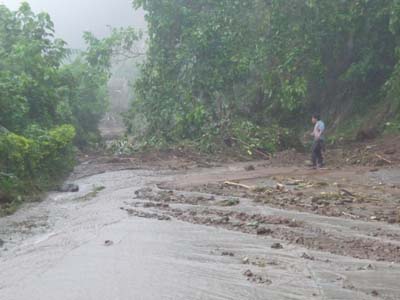
Landslide
en route
08/05/2009
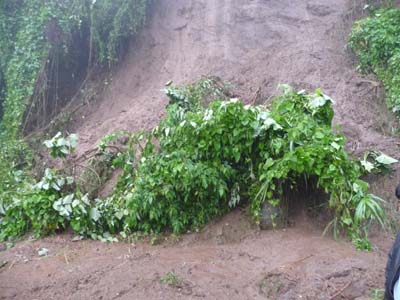
Landslide
en route
08/05/2009
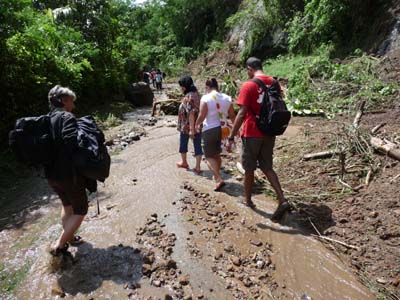
On foot in mud
en route
08/05/2009
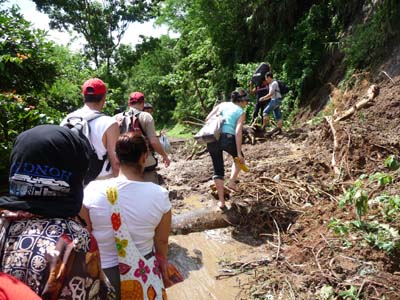
On foot in mud
en route
08/05/2009
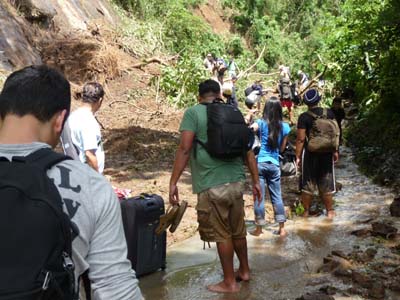
On foot in mud
en route
08/05/2009
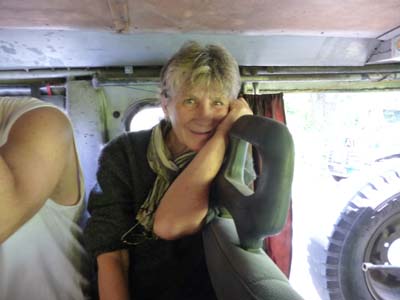
Josette
en route
08/05/2009
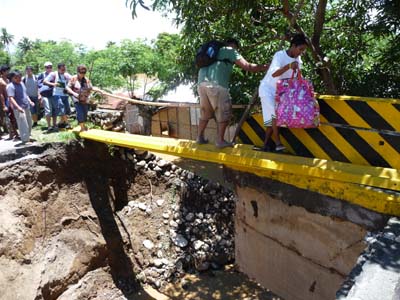
Broken bridge
en route
08/05/2009
The visit of Cordillera in Luzon was finished.
Barocay Island
After the epopee of the end of the voyage in Cordillera I remained two days in Manila before moving again to go to have rest on the island of Barocay. The 11/05 was a transit day by bus to Batangas, then on ferry boat to Calapan, island of Mindoro, and finally by mini-van to Roxas where I arrived around 16:00. This city is the port of loading of trucks to the island of Panay. The following day was still a road day on ferry boat from Roxas to Caticlan, island of Panay, then a shuttle of small boats to the island of Barocay and finally a tricycle to the hotel where I arrived about 16:30. I rested at the edge of the beach until the 15/05. This white sand beach is pleasant but without more bicause very narrow. The part under palm trees is occupied by restaurants of the hotels. In fact it is only a succession of restaurants, shops for tourists and centre of deep-sea diving.
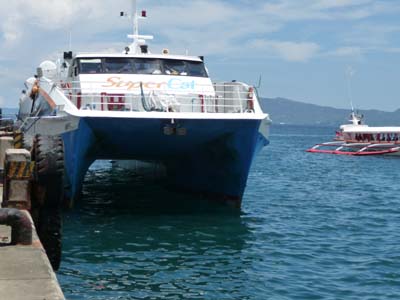
En route
vers Calapan
11/05/2009
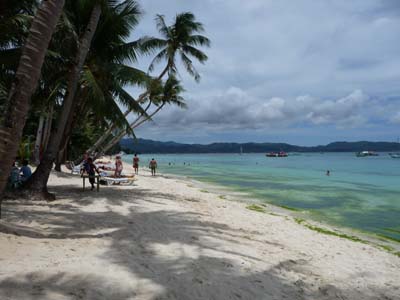
White sand Beach
Barocay
12/05/2009
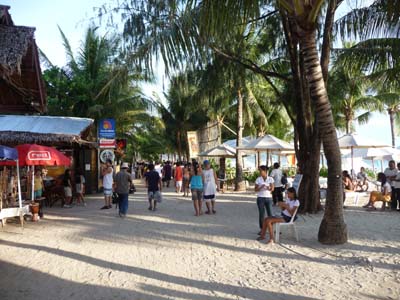
Beach
Barocay
12/05/2009
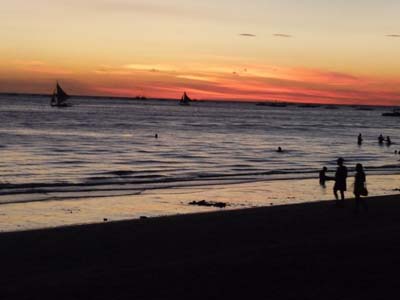
Sunset
Barocay
12/05/2009
Panay Island
The 15/05 I turned again to Caticlan to take a bus to go in six hours in Iloilo which I visited in the afternoon. Sights are very few, Belfry Tower in front of the cathedral, old wooden houses and a small museum which exhibits a head of a skeleton with golden occlusions on the orifices. Golden occlusions found in burials belong to the exposition of the Crossroads of Civilizations of the museum of Ayala in Manila. The stop in Iloilo was justified by the visit of old Hispanic churches in the west of Iloilo.
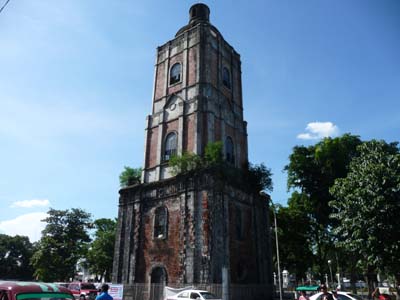
Belfry Tower
Iloilo
15/05/2009
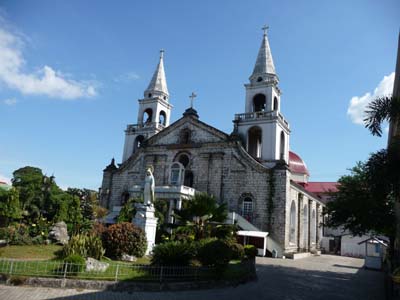
Jaro Metropolitan Cathedral
Iloilo
15/05/2009
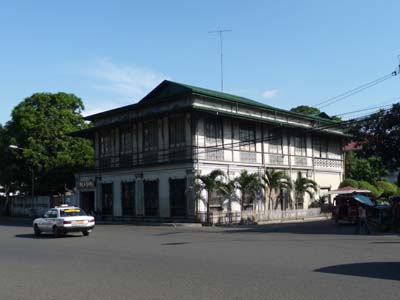
Old house
Iloilo
15/05/2009
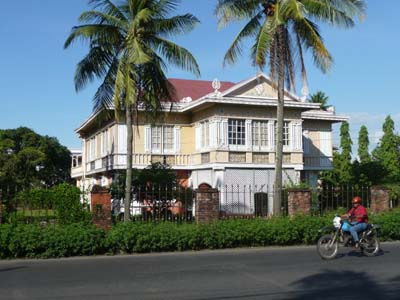
Old house
Iloilo
15/05/2009
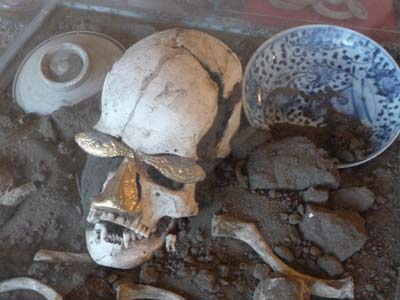
Museum
Iloilo
15/05/2009
The church of San Joaquin has a façade with a bas-relief representing a battle between Christians and Moslems, ancestral enemy.
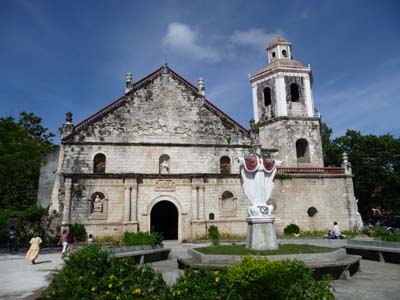
Church
San Joaquin
16/05/2009
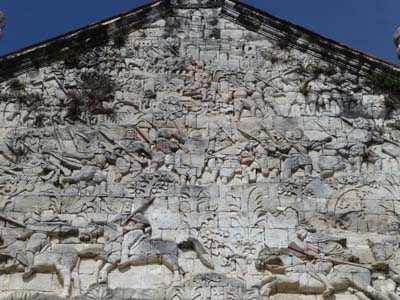
San Joaquin Church, Battle
San Joaquin
16/05/2009
The church of Miag-Ao is registered by the world inheritance of humanity with in façade a bas-relief of St Christopher strolling in a tropical forest with the infant Jesus.
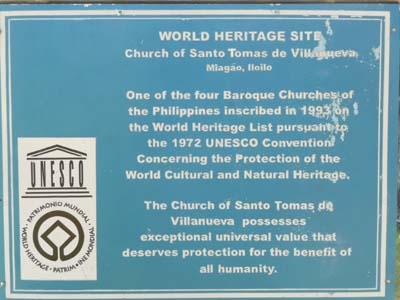
Church
Miag-Ao
16/05/2009

Santo Tomas de Villaneuva
Mia-Ao
16/05/2009
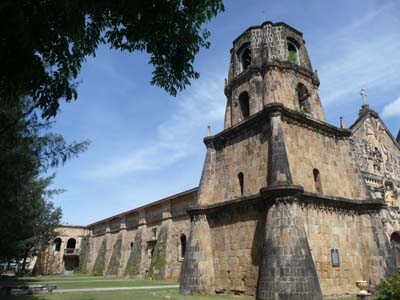
Church
Miag-Ao
16/05/2009
Guimbal has a Roman sandstone church close to a very pretty place. At the village of Tigbauan a baroque church with remarkable bas-reliefs was the first Jesuit school founded in 1592. In this Saturday I attended a marriage. These visits took a small day requiring waiting of the passage of a jeepney to go to the following village.
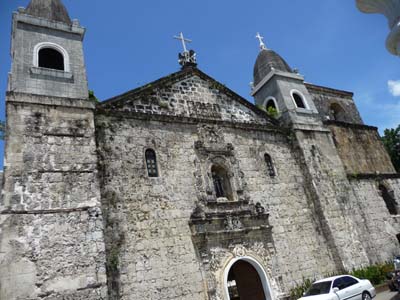
Roman Church
Tigbauan
16/05/2009
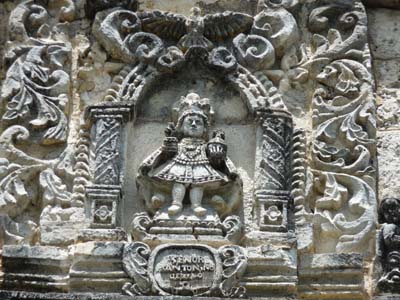
Church
Tigbauan
16/05/2009
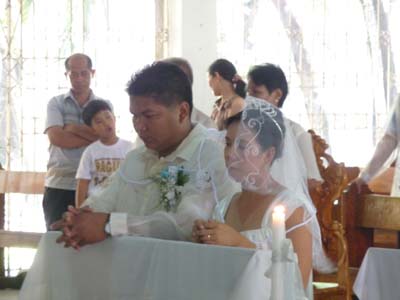
Weeding
Tigbauan
16/05/2009
Cebu Island
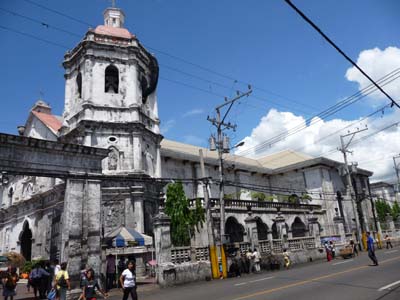
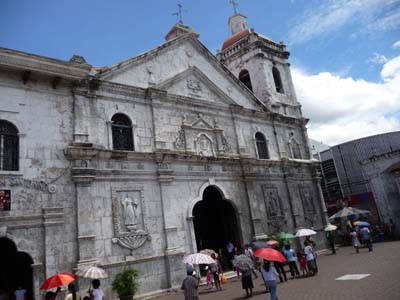
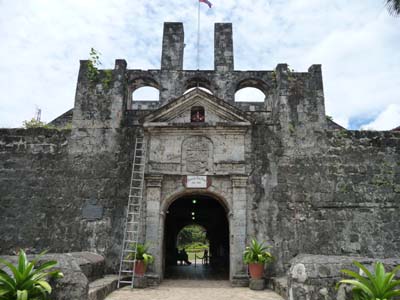
Cebu Island. The 17/05 I took a plane to Cebu City. At the security control it was necessary to deposit luggage, camera, to empty pockets but also to take off its shoes! Then I was palpated. From the 18 to the 20/05 I visited the city which does not require such a long stay motivated in having a seat on the plane to Puerto Princesa on the island of Palawan.

Cathedral
Cebu City
18/05/2009
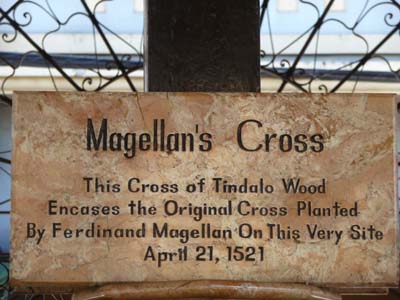
Magellan's Cross
Cebu City
18/05/2009
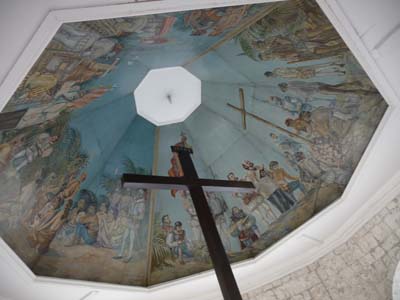
Magellan's Cross
Cebu City
18/05/2009
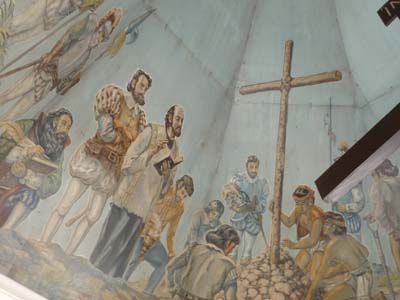
Magellan's Cross
Cebu City
18/05/2009
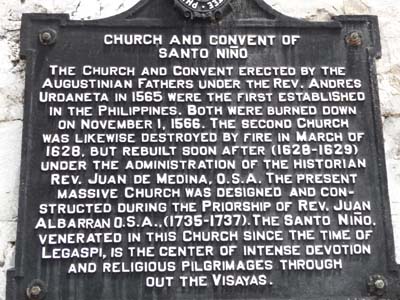
Basilica Minore Del Santo Nino
Cebu City
18/05/2009
Basilica Minore Del Santo Nino
Cebu City
18/05/2009
Basilica Minore Del Santo Nino
Cebu City
18/05/2009
Fort San Pedro
Cebu City
18/05/2009
Fort San Pedro, Lopez de Legazpi
Cebu City
18/05/2009
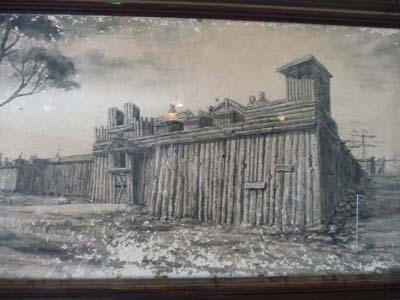
Fort San Pedro, wooden orignal Fort
Cebu City
18/05/2009
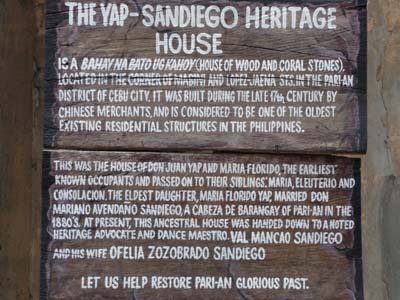
Old house
Cebu City
18/05/2009
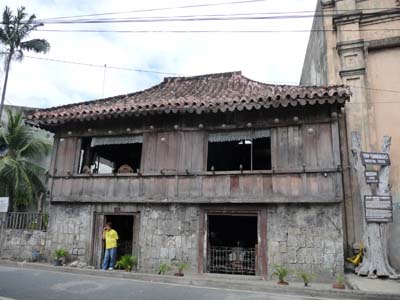
Old house
Cebu City
18/05/2009
Old house
Cebu City
18/05/2009
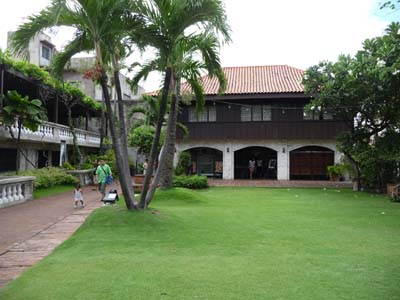
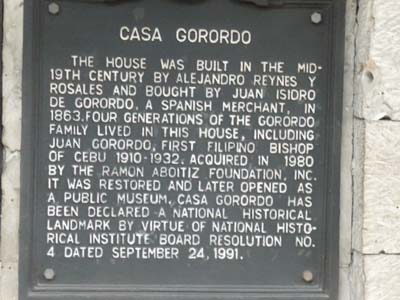
Casa Gorordo
Cebu City
18/05/2009
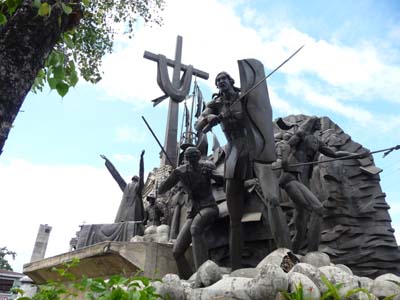
Heritage Cebu Monument
Cebu City
18/05/2009
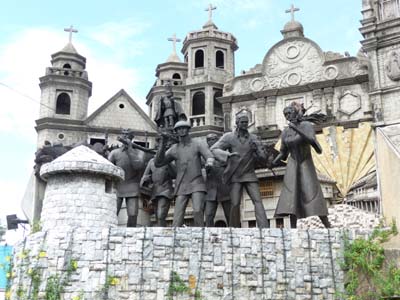
Heritage Cebu Monument
Cebu City
18/05/2009
Beverly Hills
Cebu City
19/05/2009
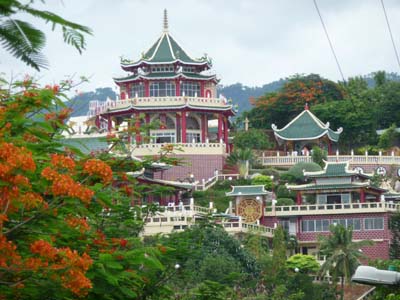
Taoist Temple
Cebu City
18/05/2009
Palawan Island
The plane was delayed of more than one hour. By Internet I had reserved a room at cast Linda Inn as well as a packaged tour to visit the Subterranean River of St Paul. The city is not of great interest. It is very polluted by the backfiring tricycles that follow one another as long cohort in the streets.
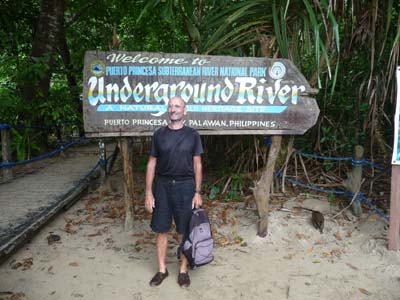
Subterranean River
Sabang
19/05/2009
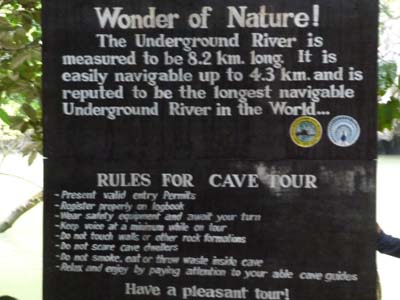
Subterranean River
Sabang
18/05/2009
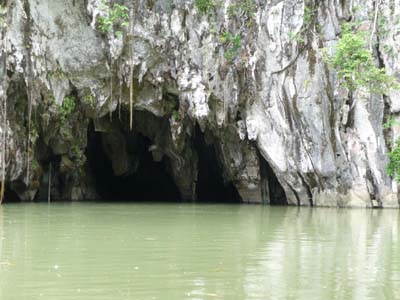
Subterranean River
Sabang
19/05/2009
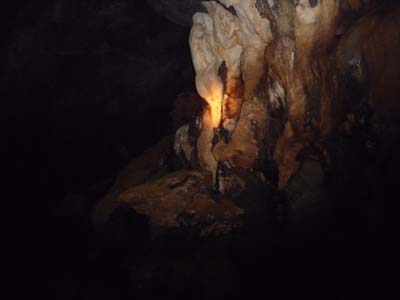
Subterranean River
Sabang
18/05/2009
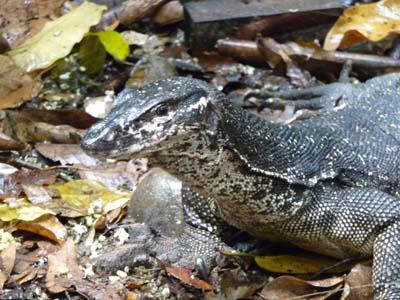
Lizard
Sabang
19/05/2009
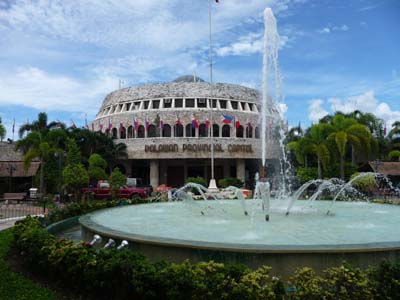
Palawan Provincial Capitol
Puerto Princesa
18/05/2009
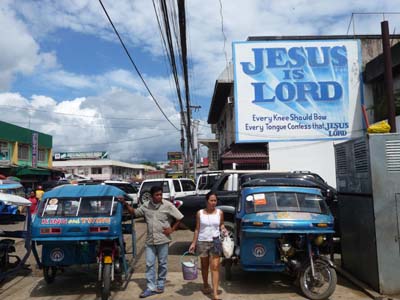
Proselitism
Puerto Princesa
19/05/2009
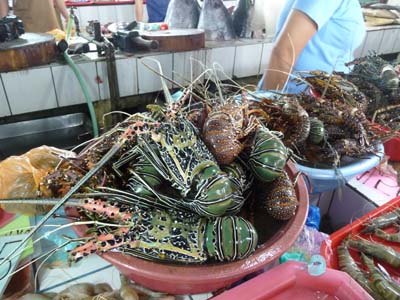
Fish market
Puerto Princesa
18/05/2009
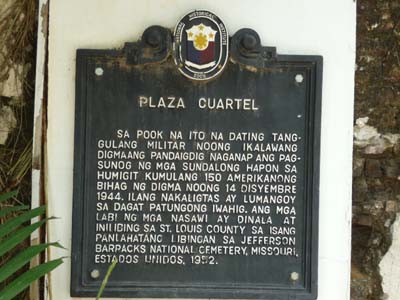
Plaza Cuartel
Puerto Princesa
19/05/2009
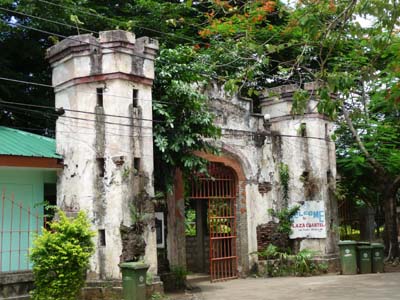
Plaza Cuartel
Puerto Princesa
18/05/2009
The journey in the Philippines ended by connecting two flights, the first from Puerto Princesa to Manila then by changing terminal the second from Manila to Kuala Lumpur where I arrived the 24/05 around 20:00. I turned again to the small hotel in Rawang where the truck was at MAN workshop.
Malaysia
I remained in Rawang to publish pages of my website concerning the journeys in Myanmar and in the Philippines as well as to transfer my two websites to a new provider offering a space without limited storage. Then I prepared the continuation of the trip round the world.